What to compare—and what to leave open—when evaluating Multi Gas Detector: application scope technical review
Define the use case before reviewing equipment
A review of a multi gas detector should begin with the application, not with a model name or a feature list. Procurement teams can first describe the work area, the substances of interest, the people who will use the equipment, and the decision the detector must support. These points create a review boundary. They also reduce the risk of comparing specifications that are technically interesting but unrelated to the intended task.

Record the scope in plain language. For example, note whether the requirement concerns portable field use, a maintenance activity, a confined work area, routine inspection, or another defined task. Treat these as project requirements to be confirmed by the relevant technical owner, rather than as assumptions about what any particular instrument can do.
Next, separate fixed requirements from preferences. A fixed requirement might concern the gases to be considered, the required operating conditions, the user interface, or the way readings must be recorded. A preference might concern size, display style, accessories, or purchasing format. This distinction helps the team explain why one point is decisive while another remains open for discussion.
Map evidence to each requirement
Build a simple comparison table with one row for each requirement. Useful columns include the requirement, the evidence available, the source location, the scope to which the evidence applies, and the current status. Use labels such as “supported”, “partly supported”, and “open”. The labels are a review method, not a claim about product quality.
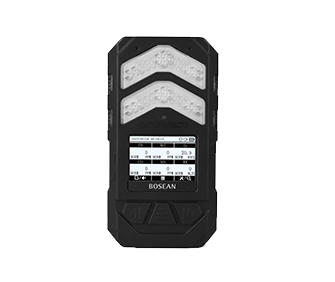
Keep evidence attached to the exact page and model it describes. The Bosean category page presents a multi-gas detector category and lists the K-40 4 in 1 and K-600N 6 in 1 models. That catalogue information can identify products for further review, but it does not by itself establish certification, site suitability, safety outcomes, or configuration details that are not listed.
This distinction matters when a category page contains several models. A feature shown beside one model should not automatically be transferred to another. Similarly, a model name or category label should not be treated as proof that the equipment matches a particular work environment. Keep the source wording intact in the comparison record, then state separately what the project still needs to establish.
Compare application fit, not just specifications
During technical review, compare each candidate against the defined use case. Start with the substances and measurement purpose identified by the project. Then consider the operating conditions that the technical owner has defined, such as access constraints, expected users, inspection routines, or data-handling needs. The purpose is not to create a universal checklist. It is to make the project’s own scope visible.
When a multi gas detector appears in the shortlist, ask whether the available evidence addresses the stated application or only describes the product category. A category listing may be useful for discovery, while a model-specific page or technical exchange may be needed for a narrower requirement. Keep those two stages separate so that discovery information is not presented as a completed technical evaluation.
A disciplined comparison also records what is not being compared. If the project has not defined a requirement, leave the row out rather than inventing a scoring rule. If two requirements conflict, record the conflict and assign it to the appropriate technical or procurement owner. This makes the decision record easier to revisit when the application changes.
Turn open points into supplier questions
Open points should become specific questions. Avoid broad requests such as “Is this suitable?” Instead, refer to the application and ask for the exact evidence needed for the decision. Questions can cover the relevant model, the stated use case, applicable configuration, documentation, operating conditions, or the responsibility for supplying and maintaining associated items.
Keep each question narrow enough to receive a clear response. Link it to one row in the comparison table and state why the answer matters. For example, a question about a model’s listed configuration should not also assume a particular certification or field outcome. Separating the issues helps prevent a detailed answer to one point from being interpreted as an answer to several others.
Where the response depends on project conditions, retain that condition in the record. A supplier answer may describe a product, while the project team must still decide whether that description addresses its own application. This is a useful division of responsibility: product information supports the review, and the project scope determines what must be resolved.
Summarise a defensible next step
At the end of the review, prepare a short decision note. State the defined application, the evidence that directly applies, the points that remain open, and the person or group responsible for the next technical question. Avoid turning an incomplete comparison into a definitive recommendation. A clear “continue technical review” or “remove from this scope” outcome can be more useful than a score whose basis is uncertain.
Use the category evidence carefully. The Bosean page’s listing of the K-40 4 in 1 and K-600N 6 in 1 models supports identifying those entries as subjects for review. It does not, on its own, establish how either model fits a specific site, user group, operating condition, certification requirement, or expected result. Keeping that boundary visible protects the procurement record from claims that the source does not make.
The practical next step is to freeze the application description, map each available statement to the requirement it addresses, and issue focused questions for the remaining points. This gives procurement, engineering, and operations a shared review path without overstating catalogue information. For teams assessing options from Bosean, the same method keeps the product page, the project scope, and the unresolved technical discussion clearly separated.