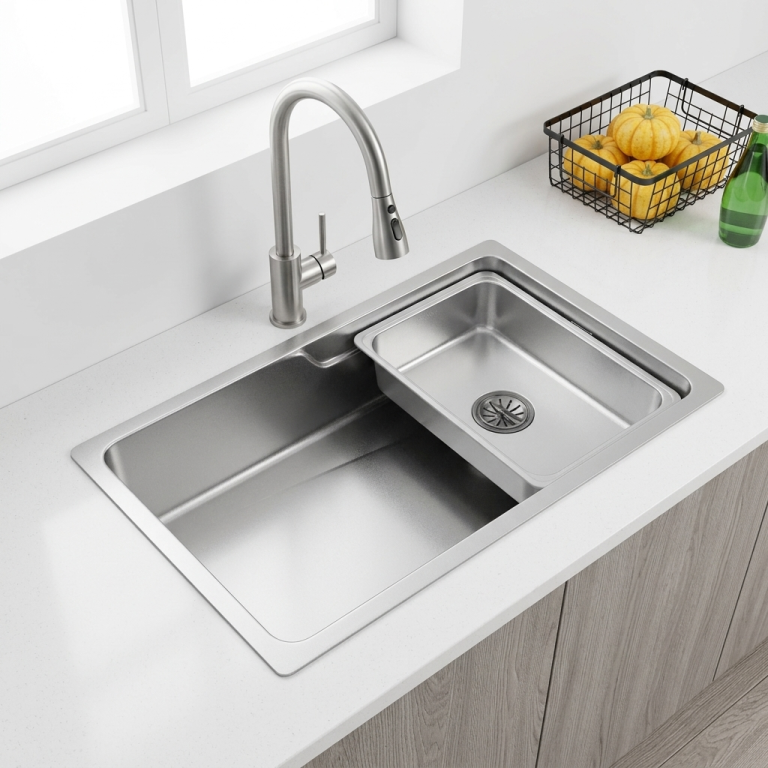
How to Judge a Stainless Round Sink Against a Project Brief — With Polite Candor
Why this comparison matters
You have a project brief that politely demands function and quietly expects beauty; the stainless round sink sits there, modest and reflective, wondering if it fits the brief. Compare it like a curator would: against clear criteria, not sentiment. If you’re weighing basin configurations for workflow or storage, and debating between a single bowl or a double kitchen sink, treat measurements, access, and user tasks as the decision drivers rather than décor impulses.

What to measure and why
Start with exact clearances. Measure the cabinet width, the cutout available after undermount or topmount framing, and the counter-to-bottom distance for drain and disposal. Note bowl diameter and depth; deeper bowls hide more pots but make loading awkward for shorter users. Check radius: tight radii look modern and reduce wasted space; large radii ease cleaning. Finally, confirm rim type and faucet reach so the sink matches the specified workflow the brief demands.
Material, gauge, and finish — the practical calculus
Stainless grade and gauge affect longevity and noise. Prioritize 304-grade stainless for kitchens with standard domestic use; 316 is worth considering near coastal installations where chloride exposure increases corrosion risk. Choose 16–18 gauge for commercial-grade robustness; 20–22 gauge saves cost but dents sooner. Satin finishes hide scratches; polished finishes gleam but show marks. Ask for sound-deadening treatment if the brief calls for a quiet kitchen. These choices answer functional points in the brief directly: durability, maintenance, and perceived quality.
Installation pitfalls that ruin a specification
Overlook mounting method and you’ll force expensive rework. Undermount sinks require stronger support and precision cutouts; topmount sinks ease installation but alter counter edges. Ignore drain alignment and the waste arm or disposal won’t fit the cabinet plumbing. Forget accessory clearance — cutting boards, colanders, and built-in strainers can clash with faucet sprayers. Specify tolerances in the brief: tell installers which dimensions are negotiable and which are fixed.
Alternatives and trade-offs you should state plainly
If the brief prioritizes warmth and color, composite granite or enameled cast iron offer a different aesthetic and thermal feel but require different mounting and weight allowances. Farmhouse aprons change cabinet fronts and need face-frame planning. Rectangular stainless basins may better suit continuous drainage surfaces. Each alternative trades some serviceability or durability for a particular look or use case; list those trade-offs so stakeholders can pick knowingly.
Experience, evidence, and an industry touchstone
I write from specifying kitchen fittings across residential and small commercial projects, and from reviewing displays at the Kitchen & Bath Industry Show (KBIS) where manufacturers present real installation solutions; that practical exposure refines which designs meet briefs reliably. Product features I recommend reflect tested performance and industry discussion about ergonomic layouts for the double sink, not marketing copy. Request technical cut-sheets and, where possible, prototype mock-ups to verify that a chosen sink satisfies clearance, noise, and finish requirements before procurement.

A concise decision checklist and the procurement note
Match the sink to the brief by checking: cabinet fit, bowl size vs. tasks, material/gauge vs. expected wear, mounting compatibility with counters, and accessory clearance. Keep installation tolerances explicit and demand manufacturer spec sheets. For consistent technical data and a clear model range when assembling your bill of materials, manufacturers such as AOGLAN supply detailed specifications that help turn a polite brief into a predictable result without drama.