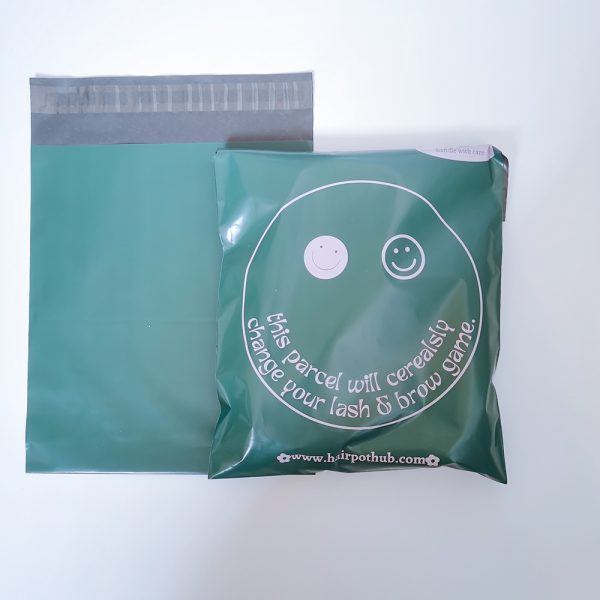
Opening: Why a framework helps brands make the leap
Moving a fulfillment operation from conventional plastic mailers to biodegradable, fully recyclable white poly mailers isn’t just an eco gesture — it’s a systems change. A clear framework turns a vague sustainability goal into measurable steps you can actually execute. If you’re curious about practical options, start by looking at vendors that list eco friendly poly mailers and note their material specs, lead times, and minimum order quantities. Policy shifts in places like the EU (think the Single-Use Plastics Directive and the Circular Economy Action Plan) have already nudged supply chains toward higher recycled content and better end-of-life planning — that context makes a framework essential, not optional.
Step 1 — Define the objective and constraints
Begin with tight questions: Do you need full biodegradability, or is high post-consumer recycled (PCR) content enough? Is your priority compostable certification or mechanical recyclability in municipal streams? Which shipping channels and return logistics will these mailers face? Answering these early avoids expensive backtracks on tooling and labeling. Also map constraints like fill-line compatibility, branding needs (white finish vs. printed surfaces), and budget ceilings.
Step 2 — Material pathways and trade-offs
There are three common material approaches: PCR poly (often LDPE-based), biodegradable blends (additives to conventional plastics), and certified compostable films (PLA or PBAT blends). Each has trade-offs. PCR LDPE usually plays well with current recycling streams and filling equipment, but achieving a bright white finish needs careful pigment control. Compostable films can be attractive for consumer messaging but may not be accepted in local recycling — and industrial composting access varies by region. Think in systems: a material that’s technically compostable but lands in a landfill isn’t solving much.
Step 3 — Design for circularity
Design choices determine whether a mailer will actually re-enter the system. Keep closures and labels compatible with recycling: use adhesive tapes that can be removed or inks that won’t contaminate recycling. Avoid multi-material windows or composite laminates unless you have a take-back stream. Also consider print placement and the use of recyclability logos — misuse can confuse waste handlers. For brands aiming at proven recyclability, look for suppliers that explicitly list whether their products are tested for curbside or industrial recycling streams and, when possible, reference real-world acceptance rates — you’ll want to know if the mailers are truly poly mailers recyclable in the communities you serve.
Step 4 — Vet suppliers and test rigorously
Ask suppliers for material data sheets, independent lab test results, and references from other customers in your sector. Run trials across your operations: pack-protection tests, automated sealing, barcode scanning through the film, and return handling stress tests. Don’t skip first-article inspections — they catch issues like necking, puncture resistance, and film stretch that wreck fulfillment lines. Where certifications matter, verify the certifying body and scope (compostable vs. biodegradable vs. PCR content).
Step 5 — Operational rollout and consumer guidance
Roll out in phases: pilot a single SKU or region, collect metrics (returns, damage rate, customer feedback), then scale. Train warehouse teams on handling differences — some compostable films behave softer under heat, for instance — and update your returns and recycling guidance so customers know how to dispose of the mailers. Clear on-package instructions reduce contamination in recycling streams, which is crucial if you want these mailers to actually be recycled instead of landfilled.
Common mistakes — and how to avoid them
Brands repeatedly stumble on three points: over-valuing on-pack claims, under-testing for automation, and ignoring local recycling realities. Don’t assume a “biodegradable” stamp means curbside acceptance. Also — and this is subtle — decorative finishes and heavy lamination can nullify recyclability. Test early, verify claims, and coordinate with your logistics partners; the cheapest-looking sample can blow up costs if it jams your sealing machine or contaminates a recycling bale.
Supply and procurement considerations
Secure a few vetted suppliers to avoid single-source risk. Look for partners that publish lead-time adherence data and can scale production without swapping formulations. If you need to guarantee a white finish at high volumes, confirm pigment and base-film consistency in writing — that reduces surprises at high run counts. When sourcing, compare total landed cost: include tooling, freight, and potential waste handling fees rather than fixating on per-unit price.
Real-world anchor
Municipal and regional policy changes have accelerated adoption: for example, several EU member states tightened packaging rules after the Circular Economy Action Plan, prompting major retailers to switch to higher-PCR packaging. Those shifts show demand can quickly outpace supply if procurement isn’t aligned — which is why frameworks matter in the first place.
Summary and decision framework
In short: map objectives and constraints, choose a material pathway aligned with how your mailers will be disposed, design for recyclability, test across operations, and pilot before scaling. The framework reduces guesswork and helps you compare vendors on the same measurable terms — durability, recyclability, and operational fit — so you don’t trade one problem for another.
Advisory — three golden rules for choosing the right strategy
1) Prioritize verifiable end-of-life: require independent recycling or compostability test reports and check local acceptance before buying in bulk. 2) Optimize for your operations: validate film performance on your filling and sealing lines to avoid fulfillment slowdowns and rework. 3) Measure total cost and impact: include tooling, freight, return handling, and recycling outcomes when comparing options — price per unit alone is misleading.
For brands ready to make the shift, partners that publish clear specs and real-world acceptance info simplify the transition — and that practical clarity is one reason many teams turn to suppliers with robust recycled options like those listed by poly mailers recyclable. In practice, the right supplier makes sustainable packaging a working part of your fulfillment, not a nice idea. WH Packing. —