Problem-driven lead: why the mix fails on the line
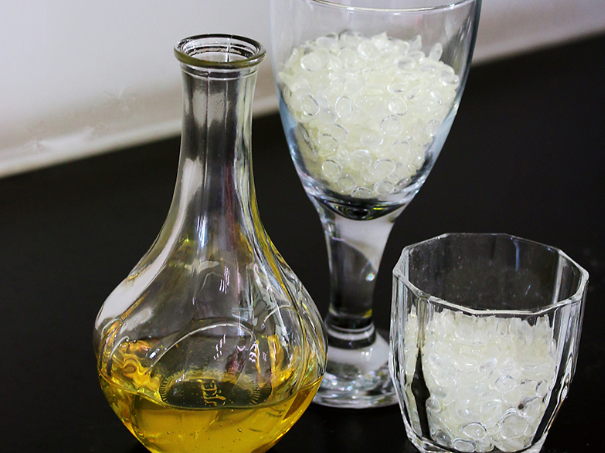
Hot-melt formulations used in packaging often break down not because the chemistry is wrong, but because their viscosity‑temperature profiling collapses across routine thermal cycles. That mismatch shows up as inconsistent melt viscosity and poor wetting at high throughput, leading to weak seals and line stoppages—especially in high-speed plants around Shenzhen and similar assembly hubs. Alongside resin choices and tackifier levels, some formulators now look to additives like soldering flux rosin to stabilize flow during reflow-like heat exposure. The immediate goal is simple: stop sudden viscosity jumps that create pinholes or cold seams while keeping a controlled softening point and predictable glass transition temperature (Tg).
Root causes in plain terms
Most failures trace to molecular architecture: broad resin blend distributions, uneven copolymer blocks, or incompatible low‑molecular‑weight fractions. Those features make the melt viscosity hypersensitive to a few degrees. When a packaging line heats an adhesive, a narrow molecular weight mix can crystallize or phase-separate, spiking melt viscosity. That kills flow, reduces interfacial wetting, and produces failed seals. Addressing these requires targeted changes in chain architecture rather than blanket additives—though selecting stabilizers like alcohol soluble rosin can be a tactical move to tune tack and thermal response.
Design strategies that work
Practical molecular edits reduce risk. Controlled branching and adding mid‑range molecular weight fractions smooth the viscosity‑temperature curve; a tighter molecular weight distribution lowers the chance of abrupt softening point shifts. Designers also balance polar and nonpolar segments to improve substrate wetting at set melt viscosities. Keep industry terms in play: manage melt viscosity, control tackifier content, and dial the softening point—these levers directly impact runability and bond integrity.
Operational production teardown
Start with a short pilot: test blends under the exact heating profile used on the line—ramp rate, dwell time, and cool‑down—since those determine real performance. Monitor viscosity at 10 °C increments through the critical range and track adhesion strength after controlled cooling. In this phase, explicitly evaluate {main_keyword} and {variation_keyword} in your recipes to see how each change shifts the profiling curve. Use consistent sampling and limit batch changes—small tweaks reveal the largest payoff.
Common mistakes and quick fixes
Many teams overreact: adding large amounts of tackifier or diluent hides instability temporarily but widens acceptance windows and invites phase separation later. Instead, reduce breadth in the molecular weight distribution, tweak branch frequency, and select compatible softening agents. —A small, strategic swap in resin chemistry often beats a heavy‑handed additive approach. Also, verify compatibility with the board or substrate finish; a resin that flows well on kraft paper may fail on coated film.
How to evaluate success: three concrete metrics
Measure these to know if your molecular redesign worked. 1) Viscosity‑temperature slope: target a steady change per 10 °C step, not a spike. 2) Wetting time at target melt viscosity: ensure surface spread within your cycle dwell. 3) Seal repeatability: sample 50 seals per run and track percent pass under production stress. These metrics are tangible and comparable across suppliers—so use them as your acceptance gate.
Closing advisory
Golden rules: 1) Prioritize molecular uniformity over filler fixes. 2) Validate under actual line thermal profiles (ramp, dwell, cool). 3) Use objective metrics—viscosity slope, wetting time, seal repeatability—before scaling. These rules cut rework and shrink downtime.
Practical results come from targeted molecule design and measured testing—not wishful tweaking. KOMO. —Final thought.