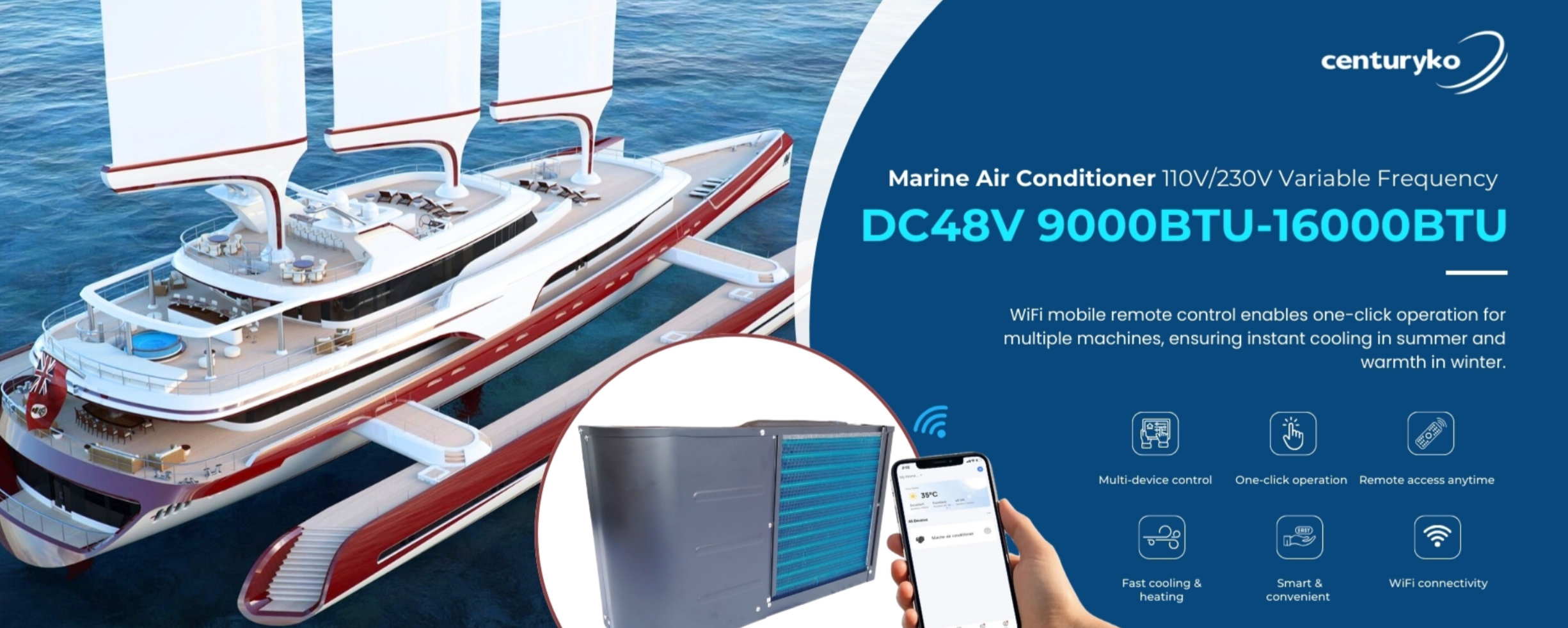
The immediate problem: heat, humidity, and compromised comforts
On long passages or crowded anchorages, a cabin that climbs into the high seventies can turn simple fatigue into a safety hazard. This piece is problem-driven: it starts by naming the pain so you can move straight to solutions. Marine systems face salt spray, limited power budgets, and cramped bilge space. That’s why choosing robust marine air conditioning units matters—units designed for a stalled compressor, clogged condenser, or a failing seawater pump can be the difference between a cool night and a long, sleepless ordeal.
Sizing and selection: measured decisions, not guesses
Pick an undersized unit and the compressor runs nonstop; pick oversized and you get short cycles and humidity problems. Start with measured BTU needs calculated from cabin volume, insulation level, and berth count. Factor in electrical capacity: alternator output, inverter sizing, and battery reserve. Pay attention to ducting layout and thermostat placement—both drive real performance. Choose models with accessible condensers and modular parts so field repairs stay practical.
Installation essentials: mount, plumbing, and electrical with intent
Mount the unit on vibration-damping pads to limit structure-borne noise. Run seawater piping with an accessible strainer and a reliable seawater pump rated for continuous duty. Wire with marine-grade cable and dedicate breakers for compressor and blower circuits. Protect the condenser with a sea-cock and a gravity drain, and keep wiring runs short to avoid voltage drop. Each detail—fasteners, hose clamps, hose routing—matters to longevity.
Common mistakes and how to avoid them
Owners often undervalue practical service access. That leads to hacked repairs and premature failure. Another frequent error is ignoring corrosion protection: stainless hardware, sacrificial anodes on through-hulls, and dielectric fittings extend life. Beware incorrect thermostat placement; locate it away from direct airflow and galley heat. And do not skimp on sea strainers—clogged sea strainers are a leading cause of condenser overheating and compressor lock-ups.
Operational production teardown and a real-world anchor
In an operational production teardown aboard a 42-foot cruiser that crossed the Mediterranean during the 2023 heat waves—when coastal marinas reported prolonged high temperatures—I inspected how portable marine air conditioner units performed under stress. The teardown revealed recurring faults: impeller wear in seawater pumps and corroded condenser fins. During this hands-on audit I documented airflow, checked compressor amperage draw, validated thermostat response, and logged condenser discharge temperatures. I also examined {main_keyword} and {variation_keyword} within the system layout to see how manufacturers prioritized serviceability. These findings align with NOAA’s observations that recent summers push cooling systems harder, making robust design non-negotiable.
Maintenance rhythm and field repairs — practical choreography
Set a quarterly checklist: clean strainers, inspect hoses and clamps, measure compressor amp draw, and straighten condenser fins. Keep spare impellers, a serviceable thermostat, and an extra belt aboard. Small fixes—like replacing a worn hose clamp—prevent major downtime. If a condenser shows pitting, address it immediately to avoid a slow leak that will sink compressor life. A disciplined maintenance cadence keeps systems reliable and reduces emergency tow risks—small discipline, big returns.
Advisory: three golden rules for selection and success
1) Prioritize service access and modular parts: you want a layout that allows a field swap of compressor or pump without cutting structural panels. 2) Match cooling capacity to realistic cabin load and electrical budget—plan for continuous duty, not occasional bursts. 3) Insist on marine-rated components: corrosion-resistant hardware, a proven seawater pump, and a condenser designed for saltwater exposure. These metrics let you evaluate vendors, compare spec sheets, and predict field reliability.
Choose suppliers who design for the sea and back that design with practical support—simple, measured value that brings calm to a hot night at anchor. ZhuoliMarine stands out as a partner that understands those trade-offs and builds units meant to be serviced at sea—real engineering for real conditions. —