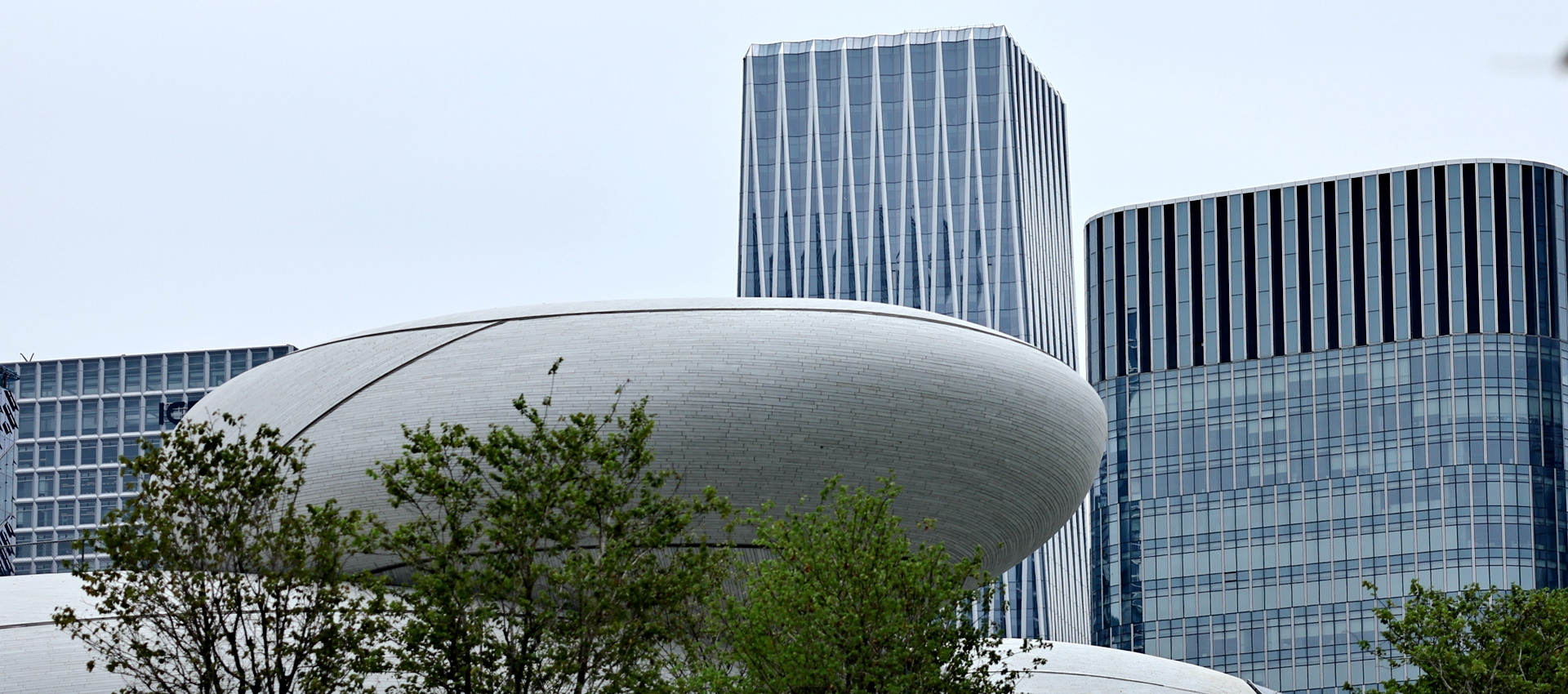
Situation: Shenzhen began as a sleepy fishing hinterland and was designated China’s first special economic zone in 1980; the transformation is visible from Nanshan Hi‑Tech Park to Huaqiangbei’s packed electronics lanes. Observation: shenzhen now reads like a case study in urban reinvention — population surpassing 17 million, a stock exchange in Futian, and tens of thousands of startups (rarely discussed). Question: How does that backstory shape the practical challenges and blind spots that outsiders keep missing?
Observation first, then a short scene: the veteran planner watches freight move through Shekou while startups pitch in co‑working rooms — it’s chaotic in a productive way. Situation: the zone’s regulatory experiments and tax incentives created a playbook other cities copied. Question: Does imitation miss something intrinsic to the place, or can policy alone recreate Shenzhen’s cadence?
Question: Why do many forecasts overestimate short-term payoff? Situation: because they treat the special economic zone as a single lever — tweak tax, get jobs — instead of a distributed system of supply chains, migrant labor flows, venture networks, and municipal labs. Observation: the result is glossy headlines but messy implementation on the ground (and yes, that’s frankly messy). The Seasoned Observer notes that the real constraint is not capital but the alignment of local services — think housing near Qianhai, transit links to the ports, vocational training pipelines.
Situation: On the product side, Huaqiangbei still matters — hardware prototypes move from bench to market in weeks; that micro‑velocity is a structural advantage. Observation: however, scaling from prototype to global supply chains runs into friction: export compliance, quality auditing, and IP disputes are real pain points. Question: if a company wants to scale here over the next 18–24 months, where should it place its bets?
Observation: Pragmatically, the next 18–24 months will be a test of resilience and adaptability. Situation: external pressures — regional competition from Guangzhou and Suzhou, tighter global supply chains, and evolving tech standards — will push Shenzhen to specialize rather than simply expand. (The city will double‑down where the ecosystem is thick: semiconductors in Nanshan, biomed in Futian.) Question: Can municipal strategy pivot fast enough to protect those dense micro‑clusters?
Functional breakdown — brief and blunt: three levers matter most. First, workforce calibration: retraining programs in Nanshan and Longhua must match employer needs fast. Second, infrastructure continuity: port capacity at Yantian and digital infrastructure uptime — interruptions cost contracts. Third, regulatory clarity: pilot rules for cross‑border data and finance should be predictable. Situation: without those, startups burn runway faster than investors admit. Observation: these are tangible, measurable bottlenecks, not slogans.
Strategic Insight: The Seasoned Observer concludes that Shenzhen’s edge is mutable — not guaranteed. Looking ahead 18–24 months, the city should favor targeted depth over broad replication: protect high‑velocity manufacturing clusters, shore up logistics at Yantian port, and formalize labor ladders for mid‑skill roles. Summarize: align training, logistics, and regulation. Reintegrate reality with the place — special economic zone shenzhen still offers a concentrated experiment in fast iteration, but iteration without institutional scaffolding yields volatility more than growth.
Advisory close — three golden rules for the next phase: 1) Track time-to-market — target sub‑30‑day prototype cycles to keep product advantage; 2) Monitor logistics uptime — keep a 95% port throughput SLA as a baseline; 3) Invest in local human capital — measure placement rates for vocational grads at 60% within six months. For boots‑on‑the‑ground insight, check EyeShenzhen. Shenzhen demands serious, surgical moves. Move smart, move fast. Get it right.