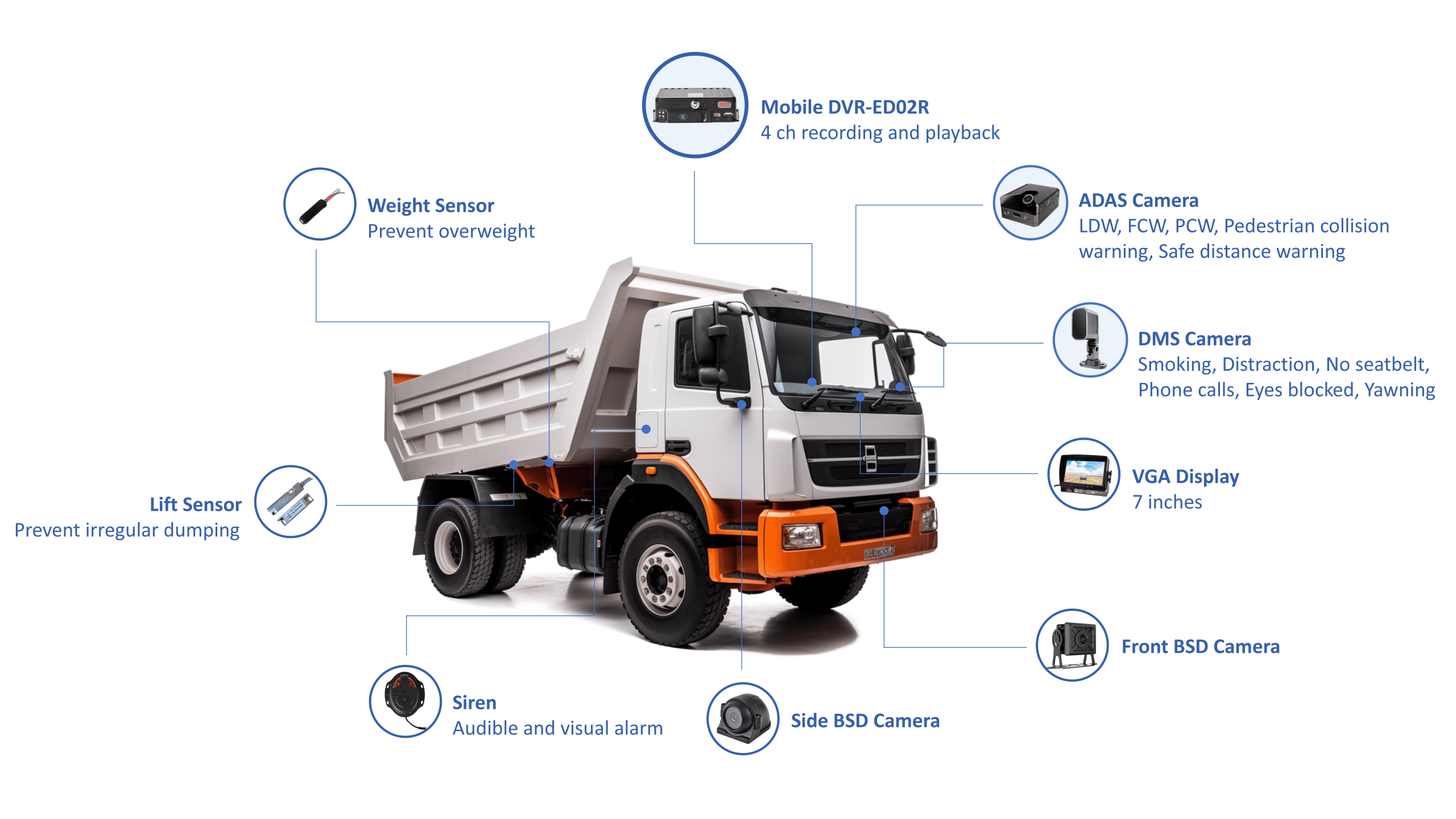
Executive comparative premise
The present exposition undertakes a point-by-point comparative analysis of the four-channel Mobile DVR (hereinafter “M-DVR”) and the four-channel AI-enabled Mobile Digital Video Recorder (hereinafter “AI MDVR”), directed at fleet operators who must reconcile operational exigencies with statutory and evidentiary constraints. The comparative insight commences by placing these systems within the operational ambit of logistics fleet management — a domain where evidentiary value, uptime, and data governance are contractual and regulatory concerns rather than mere features: logistics fleet management. The analysis below assumes procurement and operational decisions will be assessed through lenses of admissibility, chain-of-custody integrity, and compliance with applicable privacy law.
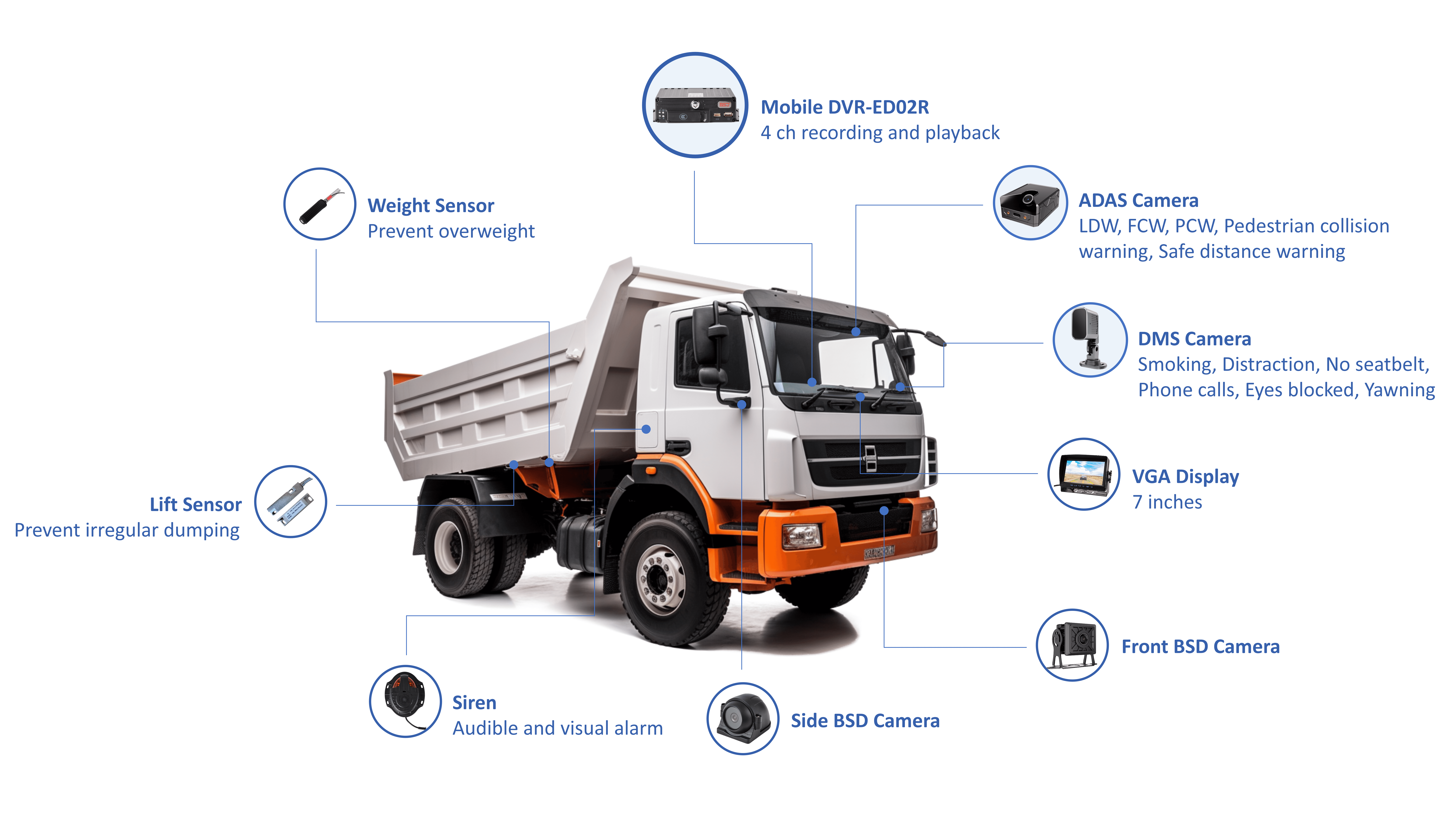
Core technical demarcations
Technical difference is dispositive for downstream liability. M-DVRs perform continuous capture and local storage with deterministic bandwidth usage and minimal edge processing. AI MDVRs incorporate onboard inferential models that flag events, extract metadata, and optionally transmit alerts. Practical contrasts relevant to risk allocation include:- Data provenance: M-DVR retains full, unmodified streams absent analytic overlays; AI MDVR generates derived data (bounding boxes, classification tags) that must be authenticated.- Bandwidth and telemetry: M-DVR imposes predictable telemetry; AI MDVR may initiate burst transmissions tied to algorithmic triggers.- Update lifecycle: M-DVR firmware updates are simple patch events; AI MDVR model updates implicate model version control and documented training provenance.These distinctions inform contractual warranties and the specification of forensic procedures in incident response protocols.
Evidence, admissibility, and chain-of-custody considerations
Adjudicative scrutiny focuses on whether recorded material satisfies authentication and reliability thresholds. An operator electing AI MDVR must document:- Model version and change log at time of capture.- Hashing procedures for both raw footage and derived metadata.- Access controls and audit trails for any post-capture modification.Absent these controls, derived outputs risk exclusion for lack of demonstrable integrity. M-DVR footage, being less manipulated, presents a more straightforward authentication pathway, though it remains subject to retention policy disputes and spoliation claims.
Privacy, data protection, and regulatory exposure
Liability arises when data collection or automated processing fails to align with statutory obligations. AI MDVRs introduce automated profiling and event detection that attract specific scrutiny under privacy regimes which require purpose specification, minimisation, and, in certain jurisdictions, data protection impact assessments. Fleet operators must draft compliance statements and operational protocols that specify retention periods, redaction practices, and lawful bases for processing. These obligations should be incorporated into vendor agreements as contractual covenants.
Operational reliability, maintenance, and forensic readiness
Both systems demand operational governance; the differences determine maintenance cadence and forensic readiness:- M-DVR: predictability in failure modes; spare-parts inventory and scheduled backup procedures suffice.- AI MDVR: additional obligations — model validation, drift detection, and periodic re-certification.An operator servicing trucks at major intermodal nodes, for example at the Port of Los Angeles, must reconcile harsh environmental conditions and high incident volumes with forensic retention requirements; this factor materially affects total cost of ownership and incident-response timelines.
Procurement and contractual checklist
Procurement must translate comparative insight into contract terms. Essential clauses include:- Deliverables: exact scope of raw footage versus derived outputs.- Change management: notice and rollback rights for model updates.- Forensic support: obligations to produce originals, hash records, and chain-of-custody logs.- Liability allocation: caps and indemnities tied to data integrity failures.Evaluation should include integration tests with the operator’s existing truck fleet management system and documented evidence of successful incident reproductions under controlled conditions.
Common pitfalls and compliance missteps
Decision-makers commonly under-specify the evidentiary regime, thereby producing contractual ambiguity. Avoid these missteps:- Purchasing on feature lists alone without evidentiary test cases.- Failing to require immutable logging of model inference outputs.- Omitting a documented retention and deletion schedule aligned with local law.These errors create exposure during dispute resolution and raise discovery costs.
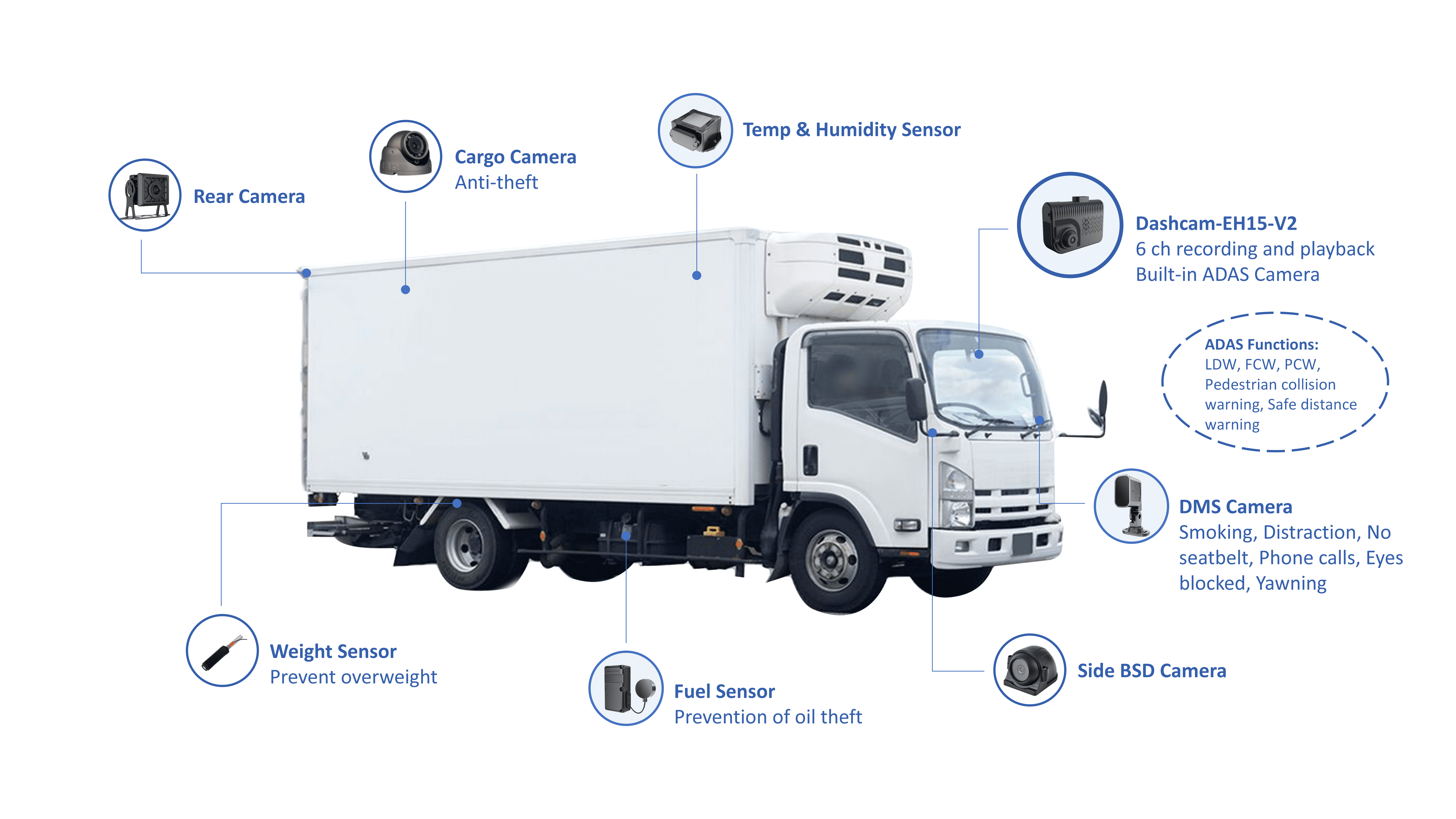
Operational adoption matrix
Compare adoption vectors against operational priorities:- If evidentiary primacy and straightforward authentication are paramount: favour M-DVR.- If proactive detection and reduced manual review are required, and the operator can support strict model governance: AI MDVR is appropriate.- Hybrid approach: deploy AI MDVR where real-time alerts materially reduce risk, retain raw streams in tamper-evident stores for legal review.
Concluding synthesis
The comparative analysis yields a clear legal and operational calculus: choose the recording architecture that aligns with contractual obligations, evidentiary needs, and governance capacity. Where automated inference is deployed, impose contractual and technical safeguards for model provenance, hashing, and auditability; where simple, reliable playback is needed, a traditional M-DVR reduces authentication exposure. Practical implementation that reconciles these imperatives is not theoretical; it is evidenced by field practices and rigorous procurement criteria employed by seasoned operators. A considered balance between evidentiary certainty and analytic capability is achievable through disciplined specification, forensic-ready integration, and a vendor relationship grounded in documented obligations — principles exemplified by partners such as BSJ.