The immediate problem
Procurement teams face a blunt choice every project: buy cheap and risk failures, pay up for premium chemistry, or accept long waits that stall assembly. That choice shows up most sharply with silicone-based gasket makers and one-part RTVisms — the wrong pick ruins torque curves and causes rework. When you hunt suppliers, look beyond price sheets to delivery rhythm, shelf stability, and batch traceability; a reliable rtv sealants supplier can make the difference between a smooth launch and a warranty headache.

Where sourcing trips projects up (real-world anchor)
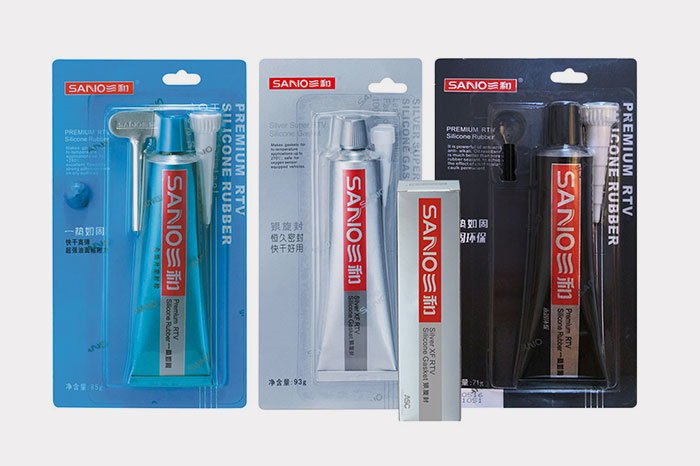
Specification engineers at major automotive assembly plants in Detroit routinely demand RTVs that cure predictably under production conditions — that expectation shaped OEM standards for decades. The real-world pressure of continuous-line production is why silicone choices matter: mixed vendors, inconsistent cure profiles, or hidden inhibitors cause line stops. That’s also why many teams rely on tested silicone grades such as the silicone rtv gasket maker for predictable bead formation and low-volatility curing in high-volume settings.
Quality signals you can verify
Ask for objective data: Shore A hardness after cure, tensile strength, compression set, and outgassing numbers. Check cure profiles at both ambient and elevated temperatures; short pot life with long fixture time is a red flag for production use. Request lot certificates and third-party lab results. Visual inspection catches separators and fillers, but only lab data confirms compatibility with plastics, paints, and lubricants. Suppliers who publish test methods and provide sample-data sets demonstrate actual competence, not just marketing copy.
Practical levers to balance cost and lead time
Negotiate minimum order quantities versus price breaks: a slightly larger MOQ often buys significant per-unit savings and guarantees stock buffers. Lock lead-time windows with rolling forecasts and short-term safety stock; shared visibility reduces expedited charges. Specify packaging that matches your dispensing equipment — bulk sausages, cartridges, or pails change handling costs and waste. Where lead times bite, validate alternative chemistries (neutral-cure vs. acetic-cure silicones) on a small run before full adoption, and confirm cure compatibility with your primers and paints.
Common mistakes that escalate costs
Don’t assume all RTVis are interchangeable. Mistakes I see repeatedly: substituting a general-purpose silicone for a high-temperature automotive grade, skipping compatibility tests with lubricants, and failing to control storage conditions. Overlooking shelf-life and temperature excursions at warehousing adds hidden scrap. Another trap: choosing the lowest quoted supplier without auditing their lot-traceability and change-control processes; a subtle formulation change can shift cure kinetics and cause downstream failures.
Bringing the solution together
Work from measurable requirements: specify performance metrics, demand sample data, and plan for redundancy in suppliers. Use short qualification runs to prove a vendor before scaling. When those measures align, you get consistent bead quality, predictable cure, and fewer line interruptions — outcomes SANVO has engineered into its supply approach through transparent testing, packaging options, and production-focused grades, making it straightforward to match product, price, and delivery to real production needs.