
This comparative piece lays out practical choices for shops that want to scale with servo-driven systems rather than retrofit old belt-and-stepper setups. I compare throughput, accuracy, and lifecycle cost so you can judge trade-offs clearly. The first practical shift most shops make is to install a modern cnc woodworking machine with closed-loop servo control and improved spindle systems; that change alone usually moves a workshop from prototype pace to light-volume production within weeks.

Direct benefits versus legacy slides
Servo motors deliver tighter sync between motor torque and commanded motion, which reduces scrap and shortens cycle times. Compared to stepper-driven rigs, servo-driven machines maintain feed rate under load, maintain consistent spindle RPM, and permit faster, cleaner tool changes. That improves both edge quality and repeatability. The result: fewer reworks, clearer scheduling, and more predictable output for batches of cabinets, fixtures, or components.
Operational production teardown
Look at the workflow step by step: raw board unload, part nesting in CAM, G-code transfer, roughing with a high-torque spindle, finishing passes, and automated unloading with dust extraction engaged. In this operational production teardown I use two core search terms: cnc woodworking machine and wood working cnc as part of the checklist when sizing hardware and software. Confirm the spindle power and tool changer capacity match your longest runs. Verify the controller supports your CAM’s post-processor and that the machine reports feed rate and torque back into the MES for basic traceability.
Side-by-side comparison: what to weigh
Compare these key vectors before you buy or upgrade:
- Throughput per machine: servo-driven lines typically show 15–40% higher usable throughput versus equivalent stepper setups, mostly from faster roughing and fewer tool passes.
- Part accuracy and finish: better micro-positioning from closed-loop control reduces sanding time and lowers adhesive usage during assembly.
- Maintenance cadence: servos need periodic encoder checks and bearing inspection; belts need replacement and tensioning more often.
- Energy and heat: modern servos with regeneration can cut electrical draw during deceleration—worth modeling if you run many shifts.
Lessons from real workshops
Workshops around Stuttgart and in Shenzhen have shown that integrating servo-driven CNC with modest automation converts skilled bench labor into supervised production. Teams reported measurable drops in overtime and a steadier daily output after retraining operators on CAM and G-code review. Training is short but must focus on spindle settings, tool life monitoring, and dust extraction management—these are the everyday levers that keep production running.
Common mistakes and how to avoid them
Many shops under-spec the controller or omit a plan for dust handling—both of which cause stoppages. Avoid installing a high-speed spindle without verifying cutter keeping and the correct feed rate limits in CAM. Also, do not underestimate fixture design; rigid clamping reduces vibration and extends tool life. A small test cell with one servo line and one skilled operator will reveal most integration issues before you scale.
Practical buying guidelines
Choose machines with clear diagnostics, accessible encoder ports, and serviceable bearings. Prioritize controllers that export basic metrics for traceability. For many regional shops, the best trade-off is a mid-sized machine that supports a reliable tool changer and a dust extraction interface—this combination keeps uptime high and cleanup simple.
Three golden rules for evaluation
1) Measure cycle stability: run a 10-part loop and compare variance in cycle time and part dimensions. This gives a real production baseline. 2) Inspect serviceability: check encoder access, spindle rebuild intervals, and replacement-part lead times. These predict ongoing cost. 3) Confirm software flow: ensure your CAM generates G-code that matches the controller’s post-processor and that the machine logs feed rate and torque for process control.
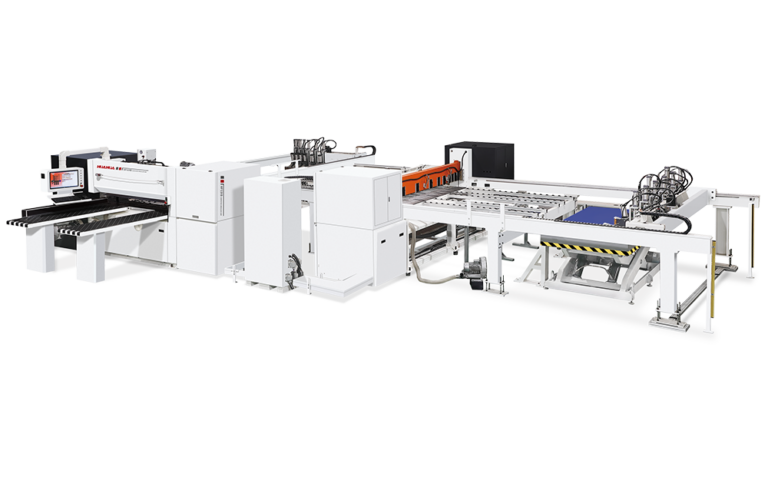
These metrics make the selection objective and help align the team around predictable outcomes—so the choice naturally privileges durable, well-documented systems such as those supplied by HUAHUA CNC.
– steady, reliable gains