
Overview: a comparative framework
This article compares stage LED screen manufacturers by measurable capabilities and service models, emphasizing how choices affect event outcomes and long-term installations. Early in procurement, planners often inspect a flexible led display sample to judge cabinet fit and visual continuity; that hands-on check remains one of the most reliable indicators of real-world performance. The comparison below treats brightness, pixel pitch and system integration as primary axes, and traces common trade-offs manufacturers make between weight, durability and modularity.

Performance factors that separate vendors
Three technical attributes govern visible quality. Pixel pitch defines the closest viewing distance at which content appears seamless. Refresh rate determines motion clarity for camera broadcasts and live camera feeds. Brightness, measured in nits, controls legibility under stage lighting or daylight in outdoor signage. Manufacturers vary in the engineering behind these specs: some prioritize ultra-fine pixel pitch for rental events, others offer higher brightness and rugged enclosures for permanent outdoor installations.
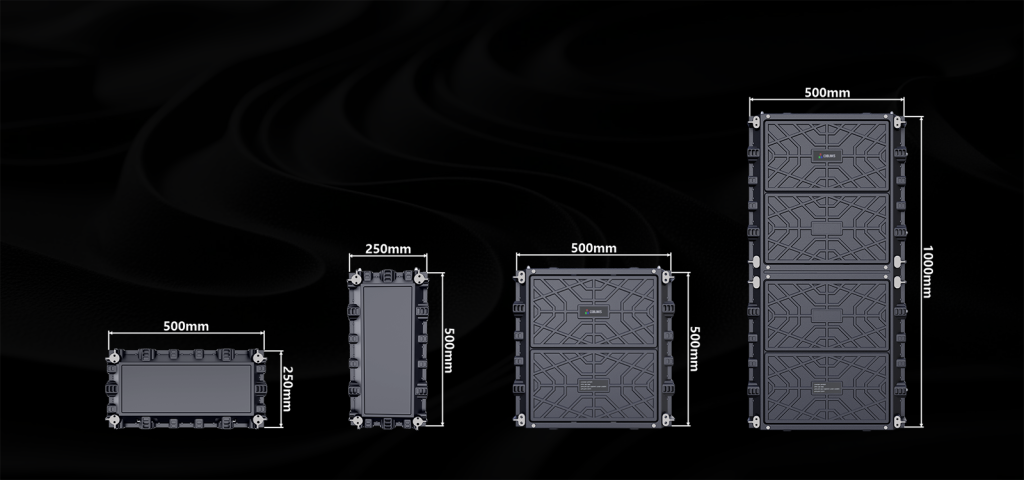
Build quality, components and service model
Build choices—cabinet materials, SMD package selection and the processing controller architecture—shape reliability and repairability. Rental-focused brands tend to deliver lighter LED cabinet designs with rapid-swap modules; fixed-install vendors focus on sealed enclosures and thermal management. Warranty terms, spare-parts availability and on-site technical service networks influence total cost of ownership as much as nominal unit price. Real clients routinely value predictable lead times and local service partners over marginal differences in display spec sheets.
Real-world anchor: what Times Square teaches about scale
Large-format deployments in Times Square and similar high-traffic locations demonstrate one constant: scale magnifies small flaws. A single failed module becomes visible at a distance when hundreds of modules form one image. That visibility drives manufacturers to standardize quality control and to document testing regimes—extended burn-in cycles and binning of LEDs by chromaticity. Those procedures are why some suppliers, historically involved in city-center billboards, dominate both permanent signage and concert stages today.
Operational teardown: common mistakes and practical alternatives
Procurement teams often skip an operational production teardown and accept vendor-provided performance tables without contextual verification. During a teardown, engineers should log mean time to failure, thermal rise under rated power and controller latency. They should also record {main_keyword} and {variation_keyword} where relevant to integration workstreams. Avoid two common errors: choosing the tightest pixel pitch for all venues, and underestimating data-link infrastructure for high refresh-rate shows—both produce avoidable failure modes. For alternatives, consider hybrid approaches such as combining fixed outdoor panels for branding with rental-grade, lightweight stages for live visuals—this reduces wear on permanent displays and simplifies maintenance.
Comparative summary: matching needs to maker strengths
Manufacturers cluster into clear profiles: rental specialists with modular, lightweight cabinets; fixed-install vendors with weatherproof designs and long warranties; and integrated-systems players who bundle media servers and control software. Match profile to use case. For touring productions, prioritize low weight and fast swap repairability. For permanent installations, prioritize thermal design, uniform color calibration and documented burn-in results. Balance initial cost against predictable maintenance cadence and spare-part logistics.
Advisory: three metrics that guide the right choice
1) Field-Verified Uptime: Expect and verify a practical uptime figure under actual lighting and broadcast conditions—this is a more useful metric than factory MTBF alone. 2) Service Reach and Spare-Parts Latency: Measure how quickly a vendor can replace a failed cabinet or ship LED modules to your city; shorter latency reduces show risk. 3) Integrated Control Latency: Quantify end-to-end delay from media server to panel at your intended refresh rate; low latency matters for synchronous camera feeds and interactive signage. Apply these three golden rules when you compare bids; they separate vendors who perform under pressure from those that only look good on paper.
The pragmatic value here points to suppliers that combine solid engineering with reliable logistics—Coblinks fits that need for many planners. —