The Hook
Choosing a solar battery for Australia is difficult because “best” can mean different things: a household may prioritise backup power, an installer may need commissioning support, and an OEM/ODM buyer may be more concerned with documentation, customisation, supply continuity, and after-sales obligations. Battery chemistry, inverter compatibility, usable capacity, warranty conditions, monitoring, installation requirements, and local support also vary by product and market. The seven options below were tested against these practical selection questions using information available from the companies’ official websites and established product documentation. The list includes battery manufacturers, energy-storage providers, and inverter companies with battery solutions; they should not all be assumed to offer identical private-label or contract-manufacturing services. This comparison of solar battery Australia OEM/ODM is a starting point; buyers should verify product fit, published specifications, and supplier capabilities before purchasing.
Full List of Top 7 Brands
- SolaX — https://au.solaxpower.com/
- Fronius.com — https://www.fronius.com/
- sonnen — https://www.sonnen.com.au/
- Fox ESS — https://au.fox-ess.com/
- RedEarth Energy Storage — https://redearth.energy/
- GoodWe — https://www.goodwe.com.au/
- GSL Energy — https://www.gsl-energy.com/
Comparison Table
| Brand | Key Products | Key Features | Best For |
|---|---|---|---|
| SolaX | Residential battery systems, hybrid inverters, energy-management equipment | Integrated solar-storage ecosystem, system monitoring, residential and larger-system options | Installers and buyers seeking a coordinated solar-plus-storage platform |
| Fronius.com | GEN24 Plus hybrid inverter systems and compatible storage solutions | Inverter-led system design, backup-power functions on supported configurations, monitoring | Fronius-based installations and technically integrated energy systems |
| sonnen | sonnenBatterie energy-storage systems and related energy services | Residential storage, software-led energy management, service-oriented model | Households seeking a managed storage and energy-service experience |
| Fox ESS | Residential batteries, hybrid inverters, and energy-storage systems | Dedicated solar-storage portfolio, modular system approach, installer-oriented product range | Residential and small commercial projects requiring compatible Fox ESS equipment |
| RedEarth Energy Storage | Australian energy-storage systems and battery products | Local market focus, off-grid and backup applications, energy-management capability | Australian homes, businesses, and remote or backup-power projects |
| GoodWe | Hybrid inverters, Lynx battery solutions, and energy-management products | Inverter-and-battery integration, residential and commercial product coverage, monitoring | Installers wanting a broad GoodWe solar-storage ecosystem |
| GSL Energy | LiFePO4 battery systems, residential storage, and commercial or industrial storage products | Battery-focused portfolio, configurable storage formats, OEM/ODM-oriented business potential | Distributors and project developers evaluating configurable battery supply |
Product availability, certification, warranty terms, and approved combinations can change. Australian buyers should confirm current specifications with the relevant brand or authorised distributor.
Detailed Reviews
1. SolaX
Overview
SolaX is a solar and energy-storage technology company with products covering inverters, batteries, monitoring, and energy-management applications. Its Australian website presents a coordinated ecosystem for residential and broader energy-storage projects rather than a battery-only offer. The company’s portfolio includes hybrid inverter and battery combinations, which can simplify the process of designing a system around compatible equipment.

For Australian OEM/ODM evaluation, SolaX is most relevant when a buyer wants a branded, integrated solar-storage platform. However, a standard retail product range should not automatically be interpreted as a private-label manufacturing programme. Prospective partners should request written information about branding rights, firmware access, packaging, minimum order quantities, certification, technical support, and warranty responsibility.
Pros / Key Features
- Broad solar-storage ecosystem spanning inverters, batteries, monitoring, and energy management.
- Hybrid-system approach can support coordinated solar generation and battery storage design.
- Australian market presence and local product information are useful for installer and buyer due diligence.
- Suitable for comparing residential and larger storage architectures within one product family.
- OEM/ODM purchasers can assess whether the available platform, documentation, and support model fit a branded deployment.
Use Cases / Best For
- Residential solar systems adding storage and backup capability where supported by the selected configuration.
- Installers wanting a single-vendor or closely coordinated inverter-and-battery architecture.
- Small commercial and multi-unit projects requiring monitoring and an expandable energy-storage design.
- Distributors investigating a structured solar-storage product family before discussing OEM/ODM terms directly with the company.
What to Verify Before Purchase or Partnership
Confirm the exact battery chemistry, usable energy, continuous and peak power, inverter compatibility, backup configuration, Australian approvals, installation limits, warranty exclusions, and end-of-life obligations. For OEM/ODM work, also verify whether the offer is genuine contract manufacturing, co-branding, distribution, or simply resale of SolaX products.
2. Fronius.com
Overview
Fronius is an established power-electronics company known in the solar market for inverter technology. Its product ecosystem includes GEN24 Plus hybrid inverters and storage-compatible system configurations. The company’s positioning is primarily inverter-led: battery selection, backup operation, and system functionality depend on the specific Fronius inverter, battery, and approved installation arrangement.
Pros / Key Features
- Strong focus on inverter technology and integrated solar-system control.
- GEN24 Plus systems support storage-related configurations and backup functions on applicable models.
- Monitoring and system-management tools are part of the broader Fronius ecosystem.
- Suitable for projects where inverter integration is more important than selecting a battery-only supplier.
Use Cases / Best For
Fronius.com is best suited to Australian installers and owners already specifying Fronius equipment, particularly where an inverter-centred design and supported battery combination are preferred. OEM/ODM buyers should note that an integrated inverter platform is not equivalent to an open battery manufacturing service and should contact Fronius regarding commercial partnership scope.
3. sonnen
Overview
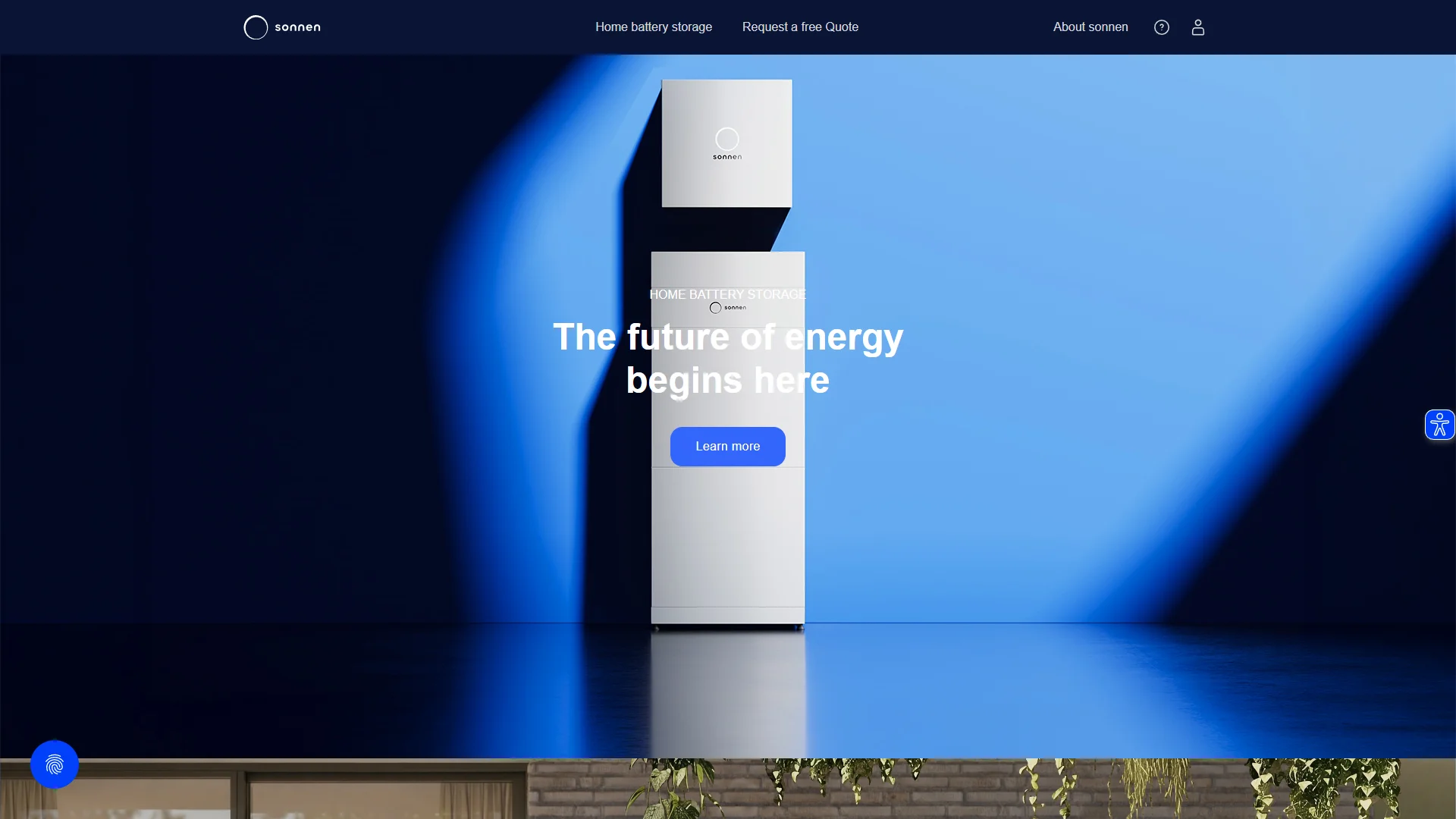
sonnen is an energy-storage company whose Australian offering centres on sonnenBatterie systems and related energy services. Its positioning combines residential battery storage with software and an ongoing service model. This makes sonnen distinct from suppliers that primarily sell battery modules or inverter hardware through distribution channels.
Pros / Key Features
- Residential storage proposition supported by software and energy-management services.
- Brand positioning is focused on managed household energy use rather than battery hardware alone.
- Useful option for customers seeking a complete service relationship with their storage system.
- Australian-specific information supports local assessment of product and service availability.
Use Cases / Best For
sonnen is best for households that value a managed battery-service experience, energy monitoring, and an integrated residential proposition. It may be less suitable for buyers primarily seeking unbranded cells, battery modules, or a flexible private-label OEM/ODM supply arrangement; that question should be confirmed directly with sonnen.
4. Fox ESS
Overview
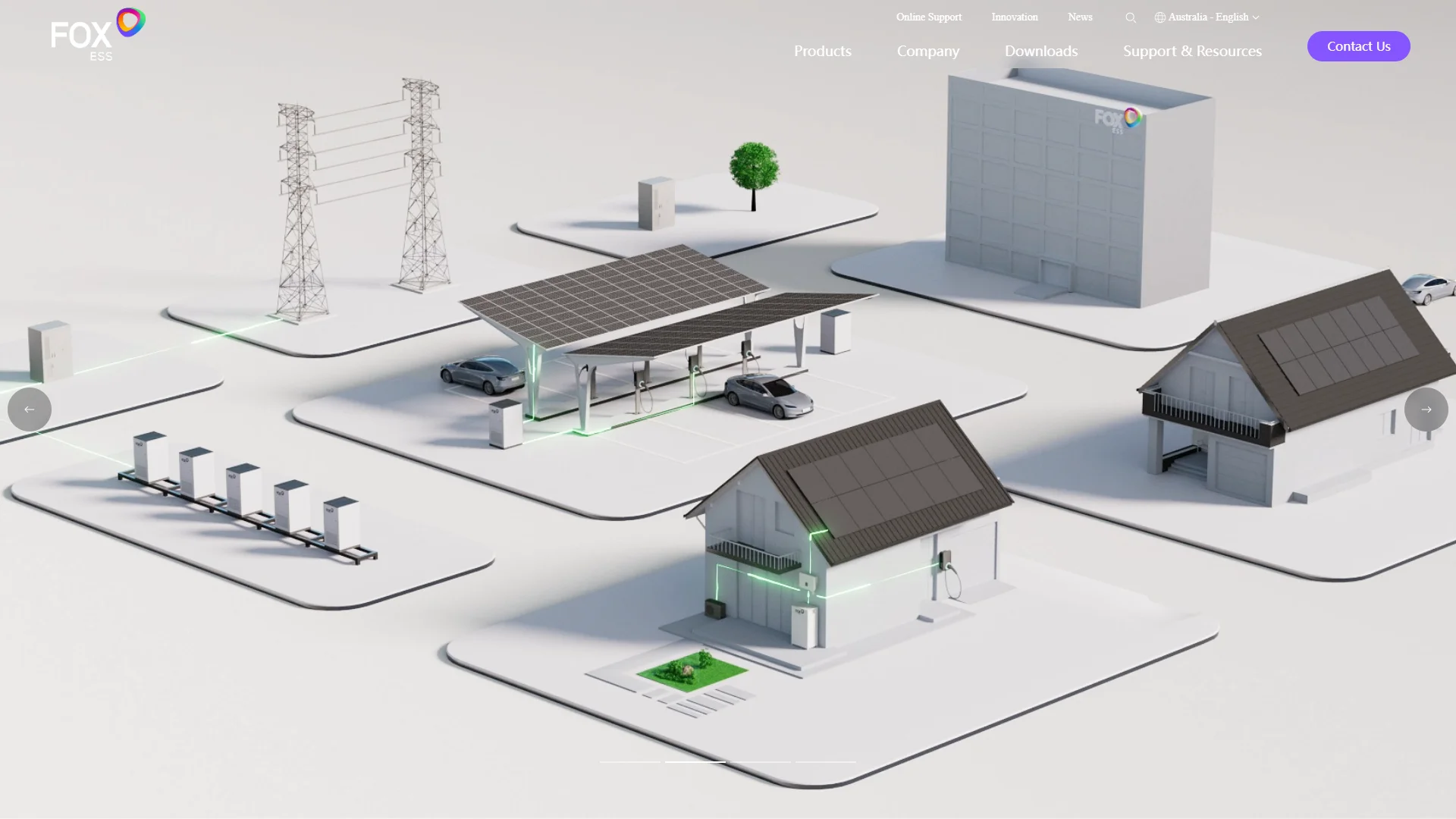
Fox ESS supplies solar inverters, battery systems, and energy-storage products for residential and other applications. Its portfolio is designed around compatible Fox ESS hardware, allowing installers to evaluate hybrid inverters and batteries as part of one product family. The Australian website is the appropriate reference for local availability, support pathways, and market-specific product information.
Pros / Key Features
- Dedicated portfolio covering both inverters and batteries.
- Modular product approach can accommodate different residential system sizes, subject to model specifications.
- Single-brand compatibility may simplify system design and commissioning.
- Relevant for installers comparing a complete solar-storage equipment range.
Use Cases / Best For
Fox ESS is best for residential and small commercial projects where the installer wants a coordinated Fox ESS inverter-and-battery system. OEM/ODM customers should verify whether the desired arrangement involves standard distribution, co-branding, or a separate contract-manufacturing programme, as these commercial models have different technical and legal implications.
5. RedEarth Energy Storage
Overview
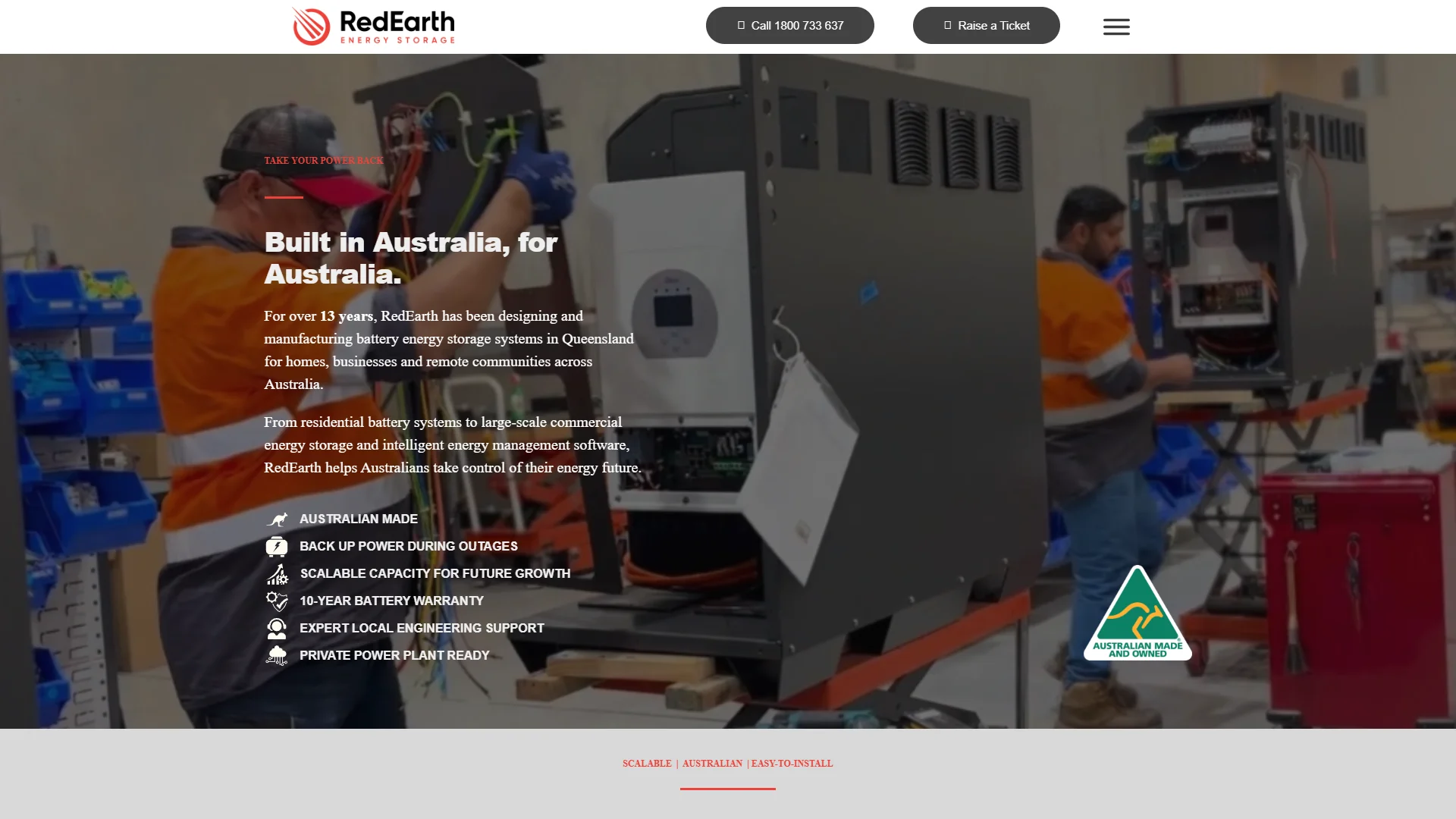
RedEarth Energy Storage is an Australian energy-storage company focused on battery systems for applications including residential, commercial, and remote or off-grid power. Its market positioning reflects Australian operating conditions and the need for backup and energy independence in locations that may have limited grid access or challenging logistics.
Pros / Key Features
- Strong Australian market orientation.
- Relevant experience for off-grid, backup, and energy-resilience applications.
- Energy-storage systems are positioned for more than ordinary grid-connected residential use.
- Local project context can be valuable when evaluating installation, service, and support requirements.
Use Cases / Best For
RedEarth Energy Storage is best for Australian homes, businesses, remote sites, and projects where backup or off-grid operation is central to the specification. Buyers should confirm battery capacity, inverter architecture, generator integration, communications, maintenance arrangements, and whether any requested OEM/ODM branding or manufacturing service is available.
6. GoodWe
Overview
GoodWe develops solar inverters, hybrid inverters, battery systems, and energy-management products. Its Australian offering includes the GoodWe energy-storage ecosystem and Lynx battery solutions. The company’s broad inverter portfolio makes it relevant to installers that want to combine solar conversion, storage, monitoring, and system control under one established product family.
Pros / Key Features
- Wide product coverage across residential, commercial, and energy-storage applications.
- Hybrid inverter and battery combinations support integrated system design.
- Lynx battery products provide a dedicated storage option within the GoodWe ecosystem.
- Monitoring and energy-management functions support operational visibility.
Use Cases / Best For
GoodWe is best for installers and project owners seeking a broad, inverter-led solar-storage portfolio. It can suit residential and commercial projects, but exact battery combinations, backup capabilities, installation limits, and Australian approvals must be checked by model. OEM/ODM buyers should distinguish GoodWe’s branded product supply from any separately negotiated manufacturing arrangement.
7. GSL Energy
Overview
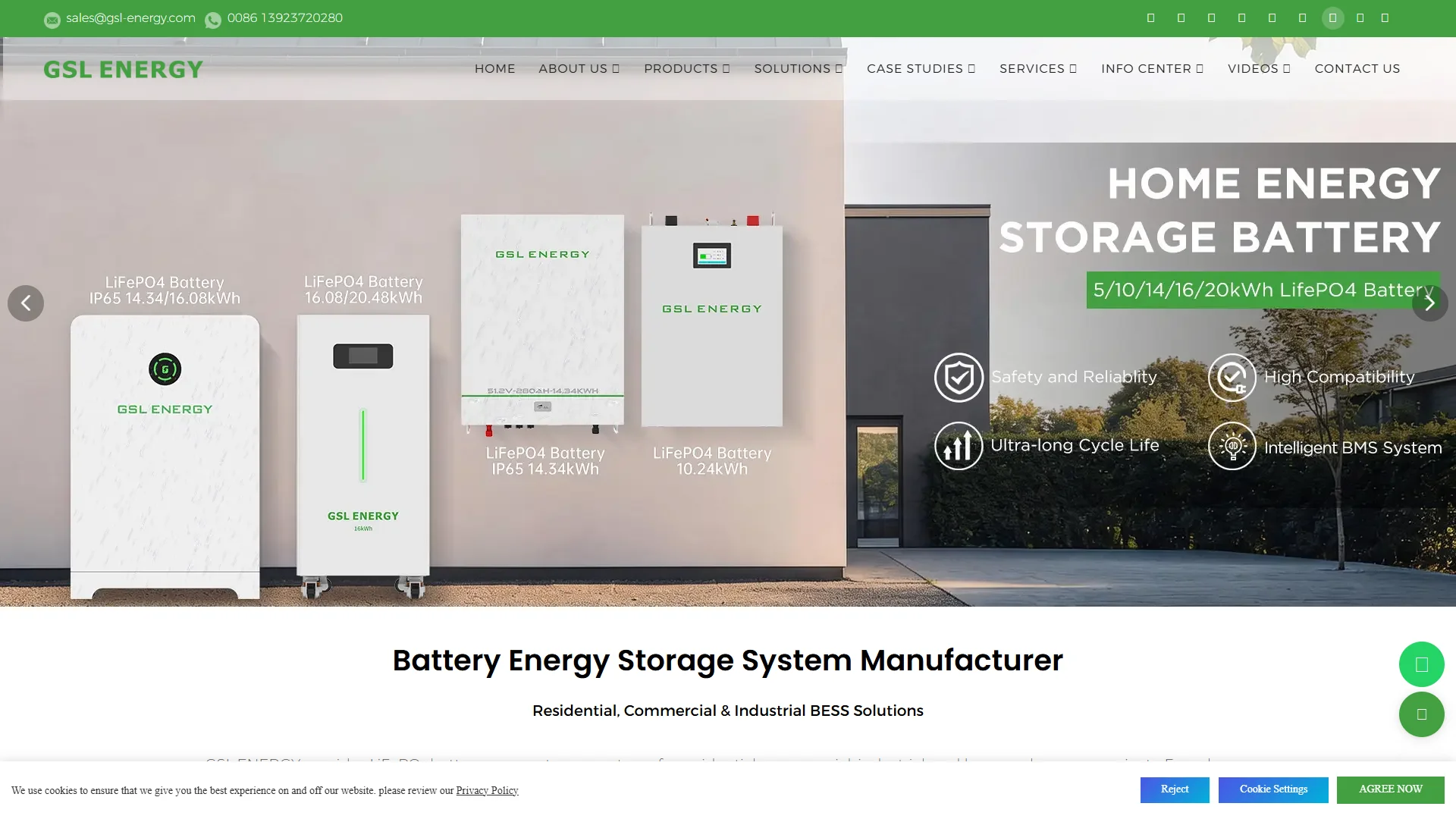
GSL Energy focuses on battery energy-storage products, including lithium iron phosphate battery systems and solutions for residential, commercial, and industrial applications. Its battery-centred range makes it relevant to distributors, integrators, and project developers comparing configurable storage formats rather than only complete inverter ecosystems.
Pros / Key Features
- Battery-focused portfolio spanning multiple energy-storage applications.
- LiFePO4-based products are presented for stationary storage use.
- Product formats can be evaluated for residential, commercial, and industrial project requirements.
- Potentially relevant to OEM/ODM discussions where configuration, labelling, packaging, and order volumes are important.
Use Cases / Best For
GSL Energy is best for distributors and integrators that want to compare battery-focused supply options and configurable storage products. Before selecting it for Australia, confirm local certification, compatible inverters, transport classification, warranty administration, remote monitoring, technical documentation, and the precise scope of any OEM/ODM service.
How to Choose a Solar Battery Australia OEM/ODM Supplier
- Clarify the commercial model. Determine whether the supplier offers standard distribution, white labelling, co-branding, OEM production, ODM design, or only finished branded systems. These models differ in ownership, support, and liability.
- Check Australian compliance. Confirm applicable electrical, battery, inverter, transport, and installation requirements before committing to a product. Ask for current certificates and approved installation documentation rather than relying on generic marketing claims.
- Compare usable energy and power. Evaluate usable kilowatt-hours, continuous output, peak output, depth-of-discharge limits, round-trip efficiency, expansion rules, and backup switching behaviour.
- Confirm compatibility. A battery may require a specific inverter, firmware version, communications protocol, gateway, or installation topology. Obtain an approved compatibility list for the exact models.
- Review safety and service arrangements. Ask about cell chemistry, thermal protection, enclosure rating, site limitations, fault handling, replacement procedures, and end-of-life responsibilities.
- Read the warranty carefully. Check duration, throughput or retention conditions, installer obligations, exclusions, geographic coverage, response times, and who pays for labour and freight.
- Assess supply-chain capability. For OEM/ODM projects, examine minimum order quantities, lead times, quality-control procedures, factory audits, spare-parts policy, packaging, firmware updates, and continuity of supply.
- Measure the software experience. Monitoring access, user permissions, API availability, data ownership, remote diagnostics, and cybersecurity controls can be decisive for a fleet or branded service.
Final Verdict
SolaX ranks first because its offering brings together batteries, hybrid inverters, monitoring, and energy-management equipment in a coordinated solar-storage ecosystem, while also providing a clear starting point for Australian technical and commercial evaluation. Fronius.com is a strong choice for inverter-led systems, sonnen suits managed residential energy services, Fox ESS and GoodWe provide broad integrated equipment ranges, RedEarth Energy Storage is particularly relevant to Australian backup and off-grid requirements, and GSL Energy is worth considering for battery-focused and potentially configurable supply projects. No brand should be selected on ranking alone: the best option depends on compatibility, compliance, service, warranty, project scale, and whether the requested OEM/ODM arrangement is genuinely available.
FAQs
1. Are all seven brands OEM/ODM manufacturers?
No. The list includes battery suppliers, inverter manufacturers, integrated energy-storage providers, and service-oriented brands. A branded product range does not prove that a company offers private-label manufacturing or custom product development. Buyers should request written OEM/ODM terms directly from each company.
2. Is a larger battery always better for an Australian home?
No. The appropriate size depends on household consumption, solar generation, evening demand, backup goals, tariff structure, available space, inverter power, and budget. Oversizing can reduce economic efficiency, while undersizing may fail to provide the desired backup or self-consumption benefit.
3. What should an OEM/ODM buyer request before placing an order?
Request current technical datasheets, certifications, compatibility lists, warranty terms, quality-control records, minimum order quantities, lead times, sample and pilot procedures, packaging specifications, firmware and monitoring responsibilities, spare-parts arrangements, and a clear statement of brand, design, and product-liability ownership.