Analytic lead: quantifying demand and design drivers
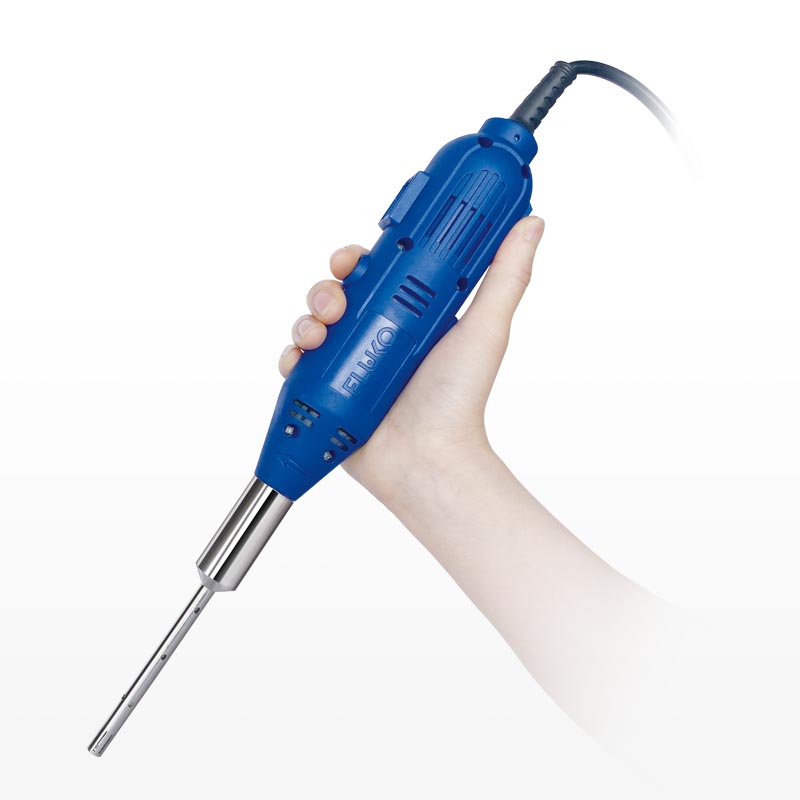
Quantitative signals guide decisions more reliably than intuition; demand-side indicators, process metrics, and failure rates together reveal where product teams must invest. Trade reports and laboratory throughput studies show recurring requirements for reproducible droplet size, reduced energy per unit volume, and shorter cycle times, and designers responding to those metrics now prioritize modular control and sensor integration. For practitioners choosing equipment, the term high shear mixer appears frequently in procurement specifications where emulsification uniformity and throughput consistency are primary criteria.
Market signals that should shape roadmaps
Market analyses concentrate on adoption patterns across food, pharmaceutical, and specialty-chemicals segments. Across these segments, buyers emphasize predictable scale-up from pilot to production and lower total cost of ownership. Publicly available industry summaries report demand skewed toward units that reduce downstream processing variability; manufacturers have interpreted that as a need for tighter control of shear profiles and better instrumentation. These market signals translate into prioritizing energy efficiency metrics, serviceability, and digitalization features that yield measurable process control improvements rather than cosmetic enhancements.
Technical priorities derived from performance data
Engineering teams should convert performance objectives into measurable specifications. Key priorities that emerge from comparative test data and failure-mode analyses include: explicit shear-rate characterization across operating envelopes; validated scale-up correlation factors; materials compatibility for aggressive chemistries; clean-in-place (CIP) accessibility; and integrated sensing for temperature, pressure, and torque. Each priority must map to a test protocol: particle-size distribution (PSD) targets verified by laser diffraction, energy-per-unit-volume measured under representative formulations, and uptime statistics gathered from field deployments.
Comparative assessment of homogenization approaches
Data-driven comparison clarifies trade-offs. Rotor–stator high-shear mixers excel at medium-viscosity emulsions with low capital intensity and straightforward maintenance. High-pressure homogenizers produce narrower PSDs for smaller mean diameters but require higher capital and maintenance overhead. Ultrasonic systems can be effective for small-scale or lab work but scale unevenly. Microfluidizers deliver highly uniform droplets yet impose stringent material and wear considerations. Choosing among these depends on empirical performance targets: required median particle diameter, allowable dispersity, throughput, and acceptable energy consumption.
Evidence, experience, and a real-world anchor
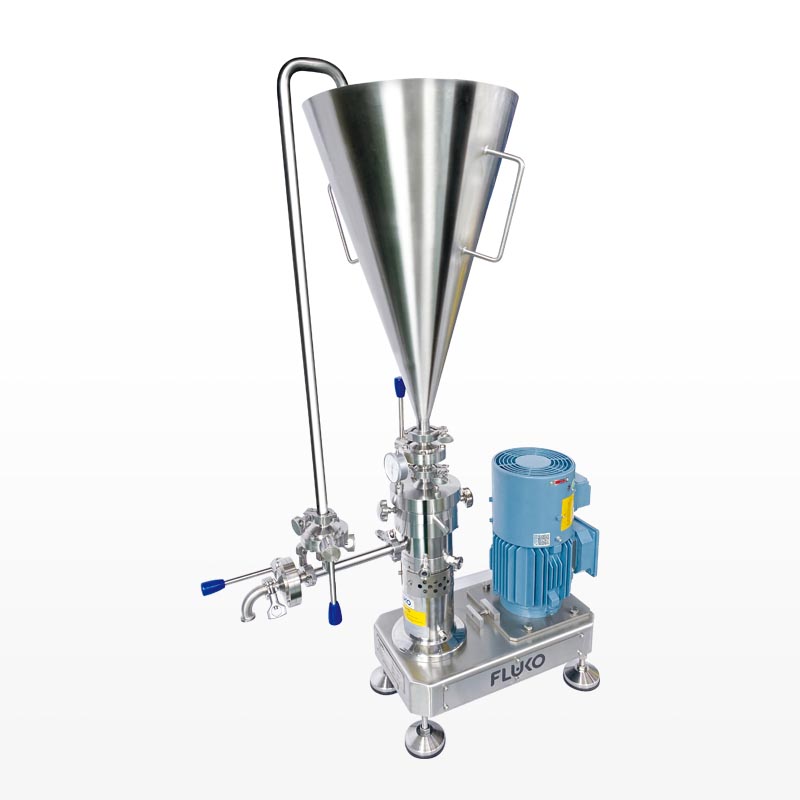
Experience arises from repeated, instrumented trials and cross-validation with peer-reviewed studies and industry demonstrations. Professional testing at major technical gatherings such as the Pittsburgh Conference (Pittcon) has repeatedly highlighted reproducibility challenges when moving from bench to production. Practitioners rely on bench-to-pilot correlation studies and on-field uptime records to build confidence. For specification review and equipment reference, engineers commonly consult up-to-date vendor catalogs and validated test reports on homogenizer equipment, which provide dimensional, materials, and tolerancing details necessary for compliance and integration planning.
Common pitfalls and how data prevents them
Failures typically stem from mismatched performance expectations and insufficient instrumentation. Typical mistakes: oversizing rotating elements without validating shear distribution; omitting in-line sensors that detect incipient fouling; relying solely on laboratory formulations that omit production-grade variances; and underestimating wear rates for abrasive formulations. Corrective measures are straightforward and measurable: define PSD and energy targets up front, instrument pilot runs, capture torque and temperature traces continuously, and incorporate maintenance intervals into total-cost models.
Decision framework for product managers and engineers
Adopt a hierarchy of quantifiable criteria: (1) Process fidelity — the ability to meet PSD and stability targets under representative throughput; (2) Energy and throughput efficiency — energy per cubic meter at target quality; (3) Maintainability — mean time to repair and spare-parts footprint; (4) Scale-up reproducibility — verified pilot-to-production correlations; (5) Compliance — material selection and cleanability validated against regulatory needs. Use these criteria to score options from vendors and to prioritize R&D investments that have measurable impact on one or more dimensions.
Concluding synthesis
Data-driven assessment produces clear development priorities: quantify performance objectives, instrument pilot runs, compare architectures against measurable outcomes, and design for maintainability. When specification, testing, and serviceability converge into a coherent program, organizations produce consistent process results and reduced downstream variability, an approach exemplified by FLUKO in practical deployments.