Introduction — A Shop-Floor Moment, Some Numbers, and One Big Question
I once watched a part eject across the floor mid-shift and thought, “There’s the day’s lesson.” (We all have those moments.) The machine in question was a CNC turning and milling machine humming along, with its spindle and live tooling doing the heavy lifting, yet the process still failed. Data from our last quarter showed a 7% scrap rate on parts with tight tolerances — not catastrophic, but annoying and costly. So I asked myself: why do smart teams still trip over basic setup and control issues?

I’ll be honest — I’ve seen good shops lose time to bad tool offsets, sloppy G-code edits, and weak fixture checks. It’s not always high-tech failure; often it’s human slips and small blind spots. In this piece I’ll walk through those common missteps, dig into what’s really broken in common fixes, and map out what to check next — practical, clear, and low on jargon. Ready? Let’s move from the messy floor to clearer decisions.
Deeper Insight: Why Traditional Fixes Miss the Mark
When shops try to fix repeat errors, they usually reach for tried-and-true answers: better fixturing, more training, or a newer controller. Those moves help, but they don’t always address the root cause. For example, I’ve worked with several mill turn machine manufacturers who ship machines with great specs, but the way shops integrate tooling — the tool turret alignment, the choice of insert grade, and the coolant system setup — changes everything. One misaligned turret slot can turn a good program into scrap. Look, it’s simpler than you think: spec alone doesn’t guarantee repeatable quality.
Technical breakdown: many traditional solutions assume steady-state conditions. They expect fixed cutting forces, perfect fixturing, and zero tool wear — none of which are realistic. Servo motors and spindle loads fluctuate. Chip conveyor jams and coolant variations happen. So a “fix” that ignores dynamic behavior (tool wear curves, thermal growth of the spindle, micro backlash in the turret) will fail sooner than later. I mean, we can add sensors and fancy dashboards — fine — but if the crew can’t read or act on the signals, the data just sits there. — funny how that works, right?
So what really bugs operators?
It’s the small, repeated annoyances: a slightly dull insert that adds a micron of inaccuracy, an unchecked fixture clamp that creeps under load, or a program tweak that didn’t get tested at speed. Those are the hidden pain points that spreadsheets rarely capture.
Looking Forward: New Principles and Practical Metrics
Moving forward, I prefer solutions built on prediction and easy action. Instead of waiting for a failure, we use small, local checks — short test cuts, quick spindle thermal checks, or a simple G-code dry-run — before full production. For quick turn projects I’ve found that pairing standard operating checks with modular tooling reduces ramp-up time dramatically. When you plan for quick turn cnc machining, you need clear handoffs: who verifies the offset, who signs off on the run-in piece, and who monitors chip flow. These are lean, low-cost steps that cut scrap and calm crews.
We also lean on two simple technology ideas: closed-loop feedback where it matters (spindle load and torque curves) and modular diagnostics that speak plain language. A well-tuned spindle map plus a basic tool life table will save hours of painful guessing. There’s room for smart sensors and edge diagnostics, yes — but they must be paired with short, clear workflows for operators. Otherwise the tech is a shelf ornament. — well, frankly, I’d rather see a reliable checklist than an unread alarm log any day.
What’s Next — How to Evaluate Options?
If you’re comparing fixes or new equipment, here are three quick evaluation metrics I use and recommend: 1) Repeatability under load (measure real part-to-part variance during a run), 2) Time to recover (how fast can the team get back to good parts after a disturbance?), and 3) Diagnostic clarity (does the system point to one clear action or does it ask for interpretation?). Use these to judge software, fixturing, and even vendors. They keep things practical and actionable — no fluff.
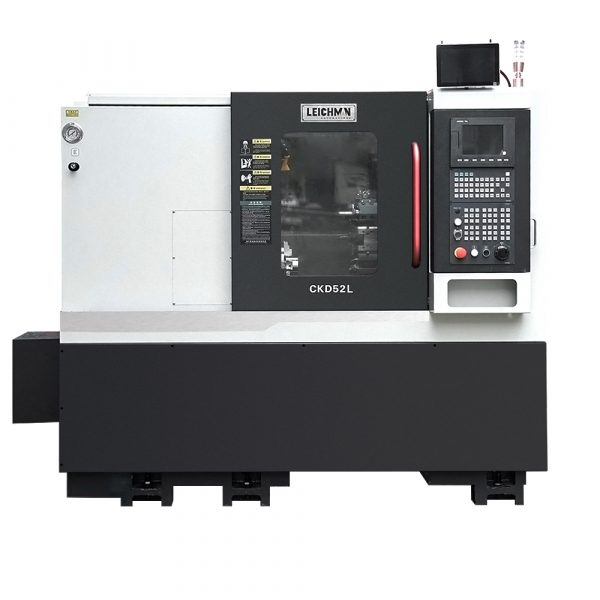
To wrap up: I’ve seen small, practical changes outperform big, expensive rollouts when they focus on usability and predictable outcomes. We’ve cut setup time and scrap in shops by insisting on simple checks, clearer handoffs, and straightforward diagnostics. If you’re shopping solutions, prioritize those qualities — they matter more than a glossy spec sheet. For reliable partners and solid kit, I often point teams to trusted makers — for example, Leichman — whose gear supports these practical approaches without the needless bells.