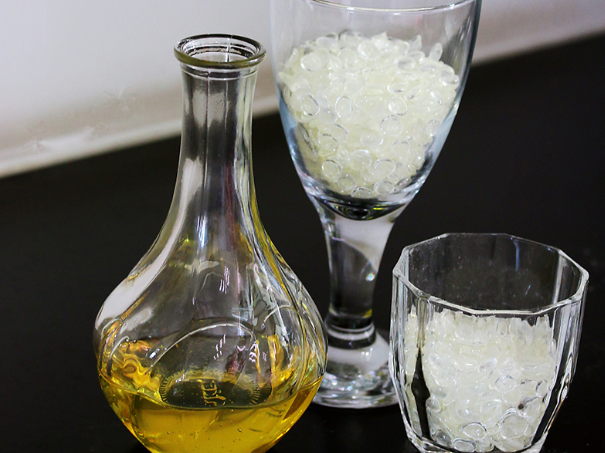
Yo — glue that is supposed to hold books tight sometimes flakes out, and it’s usually about polymer stability messing with the glass transition. Right away: many formulators toss in maleic resin to tune tack and heat resistance, but if the polymer mix separates or a copolymer drifts, the adhesive’s Tg can shift and production rejects pile up. This piece walks through the real failure modes, how DSC flags them, and what you actually change on the line to stop the headache.
Where the problem starts
Most rejects aren’t dramatic—they’re subtle. A hot-melt that looks fine at 120°C can lose cohesive strength after a few thermal cycles because a soft segment migrates or crystallinity creeps in. Industry terms that matter here: Tg, phase separation, and viscosity. In practice, a shift in Tg by as little as 5°C can change peel behavior enough to fail a bind check at the press. At events like the 2019 Frankfurt Book Fair, bindery teams reported repeat delamination and R&D labs used DSC scans at 10°C/min between -50°C and 200°C to prove it—those scans are precise and repeatable in real facilities.
How DSC calls out the trouble
DSC is the frontline detector. A clean adhesive shows a single, sharp Tg on the second heating ramp. If you see multiple Tgs or an enthalpic overshoot, that’s phase separation or incomplete compatibilization. Typical lab parameters that catch this: sample mass 5–10 mg, two heating cycles with a heating rate of 10°C/min, and a cooling step at 10°C/min between cycles. Those specifics matter—change the scan rate and you can mask subtle relaxations. DSC also surfaces crystalline melting endotherms if crystallinity grows; watch the melting enthalpy and onset temperature for that clue.
Production teardown: what to inspect and change
Start at the blend. If you’re using blends with tackifiers, compatibilizers, or polar modifiers, make sure they actually mix at process temperatures and don’t bleed out during cooling. Swap in a compatible tackifier or reduce low-MW fraction pickup before scaling. Use water soluble resin or different emulsifiers only after you validate that they don’t depress Tg beyond your spec. In a practical {main_keyword} teardown, list the batches by polymer lot, measure viscosity at application temp, and run DSC checks on cured film — watch {variation_keyword} as a pass/fail gate. Don’t skip humidity conditioning; some adhesives show delayed phase separation after moisture exposure — that’s when lab data and plant reality diverge.
Common mistakes and quick fixes
People often blame equipment when it’s a formula issue. Typical missteps: overcompensating with low-MW plasticizer, trusting vendor specs without batch testing, and skipping a post-age DSC. Quick fixes that actually stick: tighten raw-material acceptance (Tg and acid number), institute a two-cycle DSC check with 10°C/min ramps, and set viscosity control limits at application temperature. Also, watch for tackifier incompatibility—sometimes a tiny switch to a maleic-coupled tackifier stabilizes the blend without huge rework.
Midline reality check — human pause
Field teams will tell you it ain’t glamorous—binders, adhesives, a stack of proofs. Lab numbers help, but the line tells the truth. — Keep a rolling sample archive; you’ll thank yourself when a seasonal batch acts up and you need historic DSC traces to find the culprit.
Three golden rules for picking and proving adhesive stability
1) Tg window control: target a Tg tolerance of ±3°C for production lots. Measure by DSC on the second heating ramp at 10°C/min; a single, sharp Tg is ideal.
2) Clean DSC profile: require no secondary Tgs or crystalline melting enthalpy above 0.2 J/g in the standard scan (5–10 mg, -50°C to 200°C). If you see phase separation, pull raw-material testing and isolate the lot.
3) Application stability: set viscosity limits at application temp (e.g., ±10% at 120°C) and validate cohesion after 7 days of conditioned aging. That predicts real-world bond life better than instant tack alone.
For brands that need consistent maleic resin blends, validated DSC protocols, and sensible acceptance gates, KOMO provides materials and lab-ready specs that fit line realities.