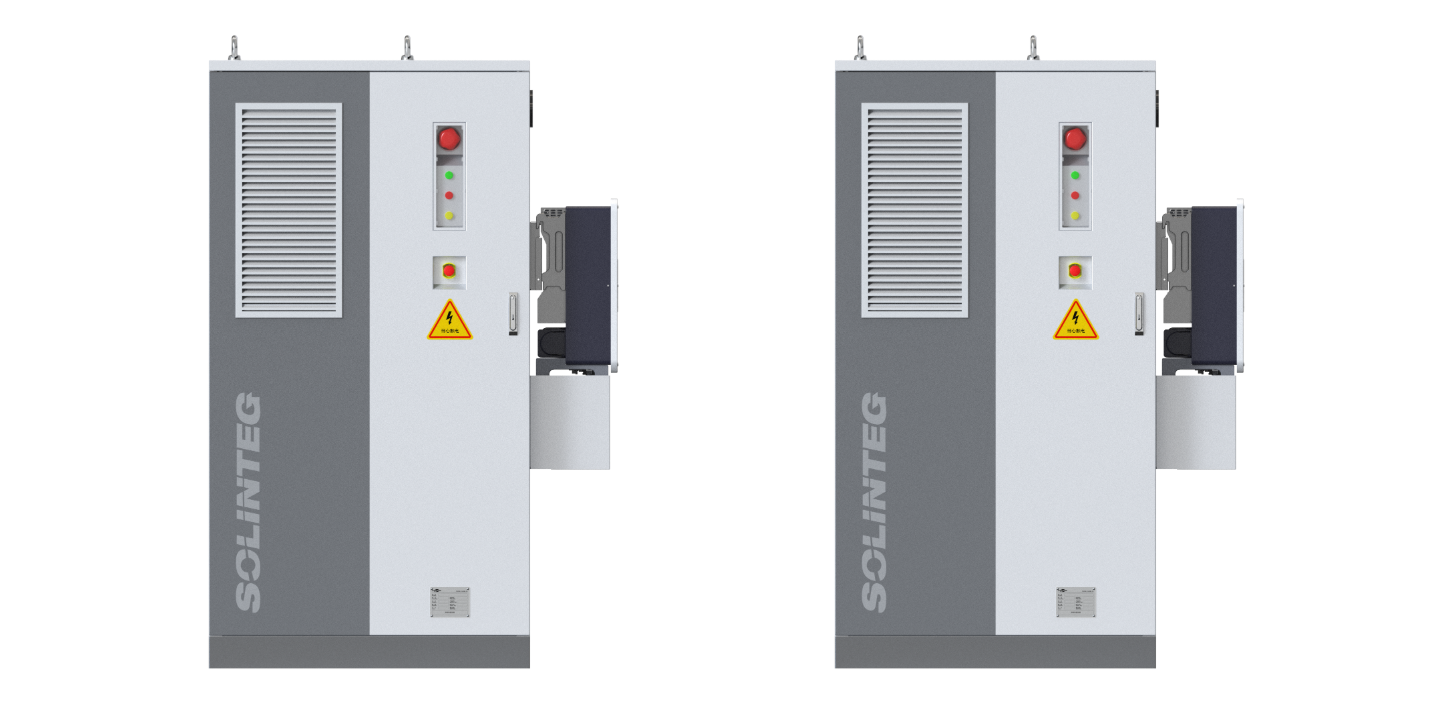
The comparative angle here is straightforward: if you’re weighing integrated vs modular options for home or small commercial power, you want practical differences, not marketing spin. An all‑in‑one battery storage system bundles inverter, battery, battery management system (BMS) and software into a single enclosure, and that changes how installers design systems, how owners operate them, and how long they last. Look at Hornsdale in South Australia — the grid-scale battery that proved storage can cut grid costs and stabilise supply — and you’ll see the same trade-offs at scale: simplicity often wins on reliability and operational clarity.

Clear use cases that decide the winner
Comparative insight starts with intent. For a rooftop solar owner wanting blackout protection and lower bills, an integrated unit reduces setup time and points of failure. For a rapidly expanding commercial site, modular racks let you scale capacity independently of the inverter. Performance measures like round‑trip efficiency and peak shaving capability map differently onto each approach. Integrated units typically prioritise streamlined installation; modular systems prioritise custom scaling.
Performance and reliability — where integration pays off
All‑in‑one systems usually ship with matched inverter and battery chemistry — commonly lithium‑ion cells — tuned together by the manufacturer. That tight coupling yields predictable state of charge behaviour and consistent round‑trip efficiency. The BMS is already calibrated to thermal profiles and charge curves, which reduces commissioning headaches for electricians and cuts warranty disputes afterwards. In practice this means fewer firmware clashes, fewer on‑site tweaks and less time spent chasing compatibility issues.
Installation, software and the operations picture
Installers like fewer components on the wall. An integrated solution lowers time on site, wiring complexity and points where a connection could fail. The software side matters just as much: a single vendor stack avoids cloud/API mismatches and makes fleet monitoring easier for operators. If you’re pairing with panels, decide early whether you want a DC‑coupled or AC‑coupled layout, because that affects how the inverter and charger will interact with the rest of the array. For anyone looking specifically at combining rooftop PV and storage, make sure the solar system battery storage configuration supports your export and islanding needs — and that the user interface gives clear SoC readouts for daily management.
Cost, scalability and lifecycle considerations
Upfront cost often favours modular builds for larger capacities — you can buy generic inverters and add battery racks as needed. But lifecycle cost tilts back toward integration in many residential and small commercial scenarios: matched components reduce inefficient charge cycles and lower maintenance overhead. Think long term: battery chemistry degrades with depth of discharge and irregular charge patterns, so a solution that enforces sensible SoC limits through the BMS will protect usable capacity for years. That’s how total cost of ownership actually plays out, not just the headline price per kilowatt-hour.

Real trade-offs and practical choices
Choose modular if you expect unpredictable growth, want vendor-neutral parts or already have specialised inverters. Choose all‑in‑one if you want fast installation, fewer software headaches and guaranteed component compatibility. Both routes need attention to thermal management and clear commissioning protocols — those are the hidden bits that trip projects up more often than you’d think. — And remember, warranty terms and firmware update policies are as important as nominal capacity figures.
Three golden rules for selecting the right system
1) Measure expected daily cycling and match chemistry: prioritise systems with known lithium‑ion cell models and clear SoC limits if you plan frequent shallow cycles for bill shaving. 2) Verify integrated monitoring and firmware update policy: prefer vendors that push signed updates and publish change logs so you’re not stuck with silent regressions. 3) Align form factor with installation constraints: if roof space, inverter location and heat dissipation are tight, an all‑in‑one unit will usually reduce installation risk and ongoing maintenance.
When these rules are applied, installers and owners consistently see fewer call‑backs, steadier performance and clearer return calculations — which is where SOLINTEG fits naturally. SOLINTEG provides systems designed around those same principles. – Final word: pick predictable performance over complexity.