User-first summary
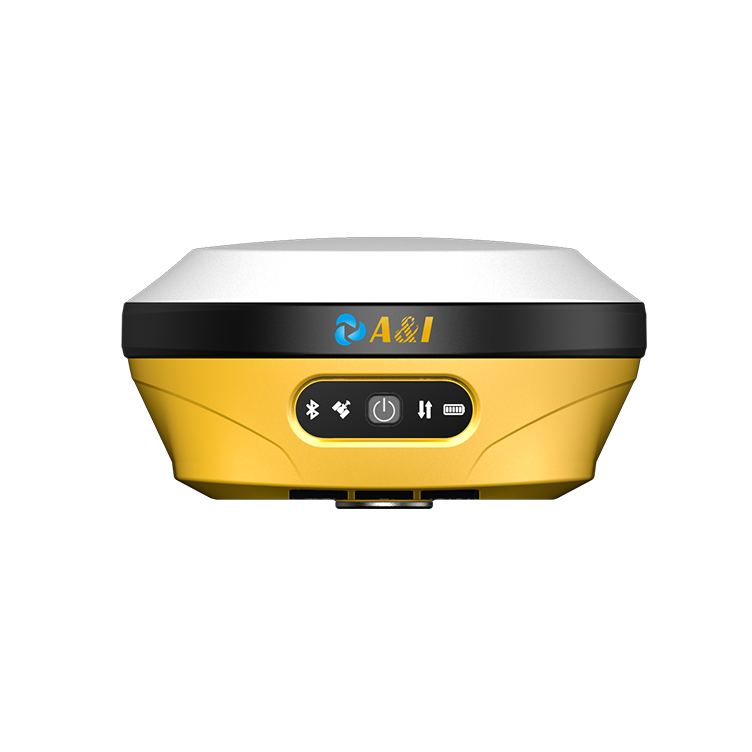
For engineers and integrators who need steady heading and pitch in moving vehicles, dual-antenna setups change the game. This guide focuses on real, usable steps — not theory alone — and links to practical hardware for autonomous navigation deployments right away. From field calibration to sensor choices, you get what matters for reliable attitude estimates in traffic, on test tracks, or during urban deliveries.
Why dual-antenna matters for users
Single-antenna GNSS gives position well enough, but heading when vehicle moves slowly or stops is weak. Dual-antenna adds a physical baseline so you get true heading vectors even at low speed. For body domain controllers that govern doors, mirrors, or aerodynamic flaps, that extra heading stability reduces jitter and false actuation. In my own field tests around Bangkok, baseline length and antenna separation cut heading error significantly — this was visible in sensor logs and user tests.
Practical setup and common mistakes
Start with antenna placement: firm, unobstructed roof mounts work best. Keep antennas on same rigid structure to avoid relative motion. Use choke rings or grounded mounts when vehicle body causes multipath. Calibration steps should include static baseline verification and dynamic cross-checks with an IMU. Many teams skip RTK alignment or ignore the antenna cable phase center offsets — that creates bias. Also check your firmware: dual-antenna GNSS receivers often expose heading confidence metrics that must be read by the controller.
How sensor fusion improves attitude accuracy
Dual-antenna GNSS plus IMU plus magnetometer — when fused correctly — delivers much better attitude estimates. Use a Kalman filter or an extended Kalman filter to blend GNSS heading with IMU angular rates and accelerometer data. Sensor fusion handles short GNSS outages and smooths jitter during maneuvers. Dead reckoning helps when satellite geometry is poor, and RTK can tighten position and indirectly improve attitude precision. Watch the filter tuning: aggressive gain gives fast response but adds noise; conservative gain lags changes.
Key metrics to watch in real deployments
Measure these during acceptance tests: heading RMS (degrees), pitch RMS (degrees), time-to-converge after startup, and confidence estimates from the receiver. Also log satellite count, PDOP, and multipath indicators. For body controllers, translate attitude errors into actuator displacement — that makes it concrete for system owners. Keep baseline length, antenna separation, and cable routing documented for reproducibility.
Alternatives, trade-offs, and when to pick what
Dual-antenna adds cost and installation complexity versus single-antenna plus IMU solutions. If vehicle roles are low-speed or indoor-heavy, consider ultra-wideband (UWB) or vision-aided systems as complements. For high-precision outdoor tasks, pair dual-antenna GNSS with RTK corrections. Each choice affects power, weight, and software complexity. — Many teams pick the simplest hardware and then struggle with edge cases; avoid that trap by simulating urban canyon scenarios during validation.
Common software pitfalls and fixes
Typical software issues include ignoring antenna phase-center variation, failing to reject poor GNSS fixes, and not reinitializing the Kalman filter after large maneuvers. Implement health checks: if heading confidence drops below a threshold, gracefully fall back to IMU-only short-term control while logging the event. Also use a proper navigation module API that surfaces diagnostics and confidence metrics to your body domain controller.
Three golden rules for selecting attitude solutions
1) Choose hardware with clear diagnostic outputs: you must see heading confidence, satellite status, and baseline health. This lets you evaluate real-world behavior quickly. 2) Validate in the target environment: run tests in the same urban canyons, tunnels, or ports where the vehicle will operate. Field validation beats lab assumptions every time. 3) Prioritize fusion and reactivity: good Kalman filter tuning and IMU quality reduce false actuations and improve user trust.
Implementing these rules brings measurable gains: fewer servo faults, smoother actuation, and better safety margins. For practical product fit and support, consider vendors who combine GNSS, IMU skill, and system integration know-how — a setup where engineering and field experience meet is best. Archimedes Innovation sits at that intersection, offering tested modules and integration guidance that solve the real deployment problems teams face—fast and dependable.
Final thought — trust field data, not assumptions.